

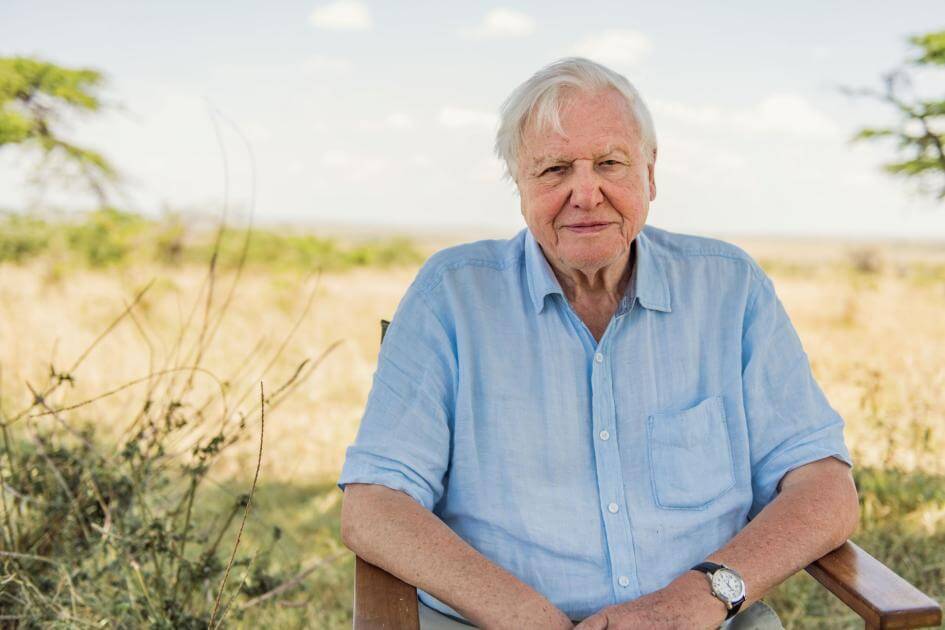
Few voices in modern science communication are as instantly recognisable as that of David Attenborough. For more than seven decades, the British naturalist, broadcaster, and documentary filmmaker has helped millions of people discover the beauty and complexity of the natural world.
Through groundbreaking television documentaries, Attenborough has taken audiences deep into rainforests, across deserts, into the depths of the oceans, and even into microscopic ecosystems that are invisible to the naked eye. His work has transformed how people understand wildlife, evolution, and the fragile balance that sustains life on Earth.
Today, Attenborough is widely considered one of the most influential science communicators in history. His films have inspired generations of viewers, scientists, and environmentalists to look more closely at the planet we all share.
Early Life and a Passion for the Natural World
David Attenborough was born in London in 1926 and grew up in Leicester, where his father served as the principal of a local university college. From an early age, he developed a fascination with nature.
As a child, he collected fossils, rocks, and natural specimens—an interest that foreshadowed his future career. Many scientists share similar childhood experiences: curiosity about the natural world often begins with simple exploration.
Attenborough later studied natural sciences at University of Cambridge, focusing on zoology and geology. His education provided a strong scientific foundation, but his career path would soon take a different direction from traditional academic research.
Instead of becoming a laboratory scientist or field researcher, Attenborough would dedicate his life to bringing scientific knowledge to the public.
The Beginning of a Television Revolution
In the early 1950s, television was still a relatively new medium. The British broadcaster BBC was experimenting with ways to use television for education and public engagement.
Attenborough joined the BBC in 1952 and quickly became involved in one of the earliest wildlife programmes ever produced: Zoo Quest.
The programme followed expeditions to remote regions of the world to film rare animals in their natural habitats. At a time when most wildlife footage was filmed in zoos or controlled environments, this approach was revolutionary.
Filming wildlife in the wild required enormous effort. Cameras were bulky, film stock was limited, and transporting equipment to remote jungles or mountains was extremely challenging. Despite these obstacles, Attenborough and his team managed to capture remarkable footage that introduced audiences to animals they had never seen before.
The success of Zoo Quest proved that audiences were fascinated by real stories from the natural world.
Landmark Nature Documentaries
Attenborough’s greatest contribution to science communication came through a series of ambitious documentary projects that explored life on Earth in unprecedented detail.
One of the most influential was Life on Earth, first broadcast in 1979. This groundbreaking series told the story of evolution—from the earliest life forms to modern animals.
The programme combined scientific explanation with spectacular wildlife footage, making complex evolutionary concepts accessible to general audiences.
Following the success of Life on Earth, Attenborough continued producing large-scale documentary series, including:
1. The Blue Planet – exploring the mysterious ecosystems of the oceans
2. Planet Earth – showcasing the diversity of life across the planet
3. The Green Planet – focusing on the remarkable world of plants
These documentaries set new standards for wildlife filmmaking and remain some of the most successful nature series ever produced.
Technology and the New Era of Wildlife Filming
Another reason for the extraordinary success of Attenborough’s documentaries is their use of innovative filming technology.
Over the decades, wildlife filmmakers have adopted increasingly advanced tools that allow them to capture scenes previously impossible to film.
Modern productions often rely on:
— high-speed cameras to capture rapid animal movements
— drones for aerial perspectives
— underwater robotic cameras
— thermal imaging technology
— ultra-high-resolution cameras
For example, Planet Earth II used drone cinematography extensively, allowing filmmakers to follow animals across landscapes in ways that were never possible before.
Similarly, The Green Planet used time-lapse photography to reveal the hidden lives of plants. These sequences show plants growing, competing, and interacting with their environment in ways that appear almost animal-like when viewed over accelerated time.
Such technologies help reveal scientific phenomena that are normally invisible to human perception.
The Voice That Brought Nature to Life
One of the defining features of Attenborough’s work is his narration style. His calm, precise voice has become synonymous with nature documentaries.
However, the effectiveness of his narration goes beyond tone. Attenborough has an extraordinary ability to explain scientific ideas in clear, engaging language.
His storytelling often combines several elements:
— scientific explanation
— dramatic natural events
— emotional connection with wildlife
— visual storytelling through cinematography
This approach helps viewers understand ecological processes while remaining captivated by the beauty and drama of nature.
A Growing Environmental Message
While Attenborough’s early work focused primarily on exploration and discovery, his more recent documentaries increasingly address environmental challenges.
Over the past few decades, scientists have warned about a range of ecological threats, including:
— climate change
— habitat destruction
— biodiversity loss
— ocean pollution
Attenborough has used his platform to raise awareness about these issues.
One of his most personal projects is the documentary film David Attenborough: A Life on Our Planet. In this film, he reflects on the environmental changes he has witnessed during his lifetime.
The film presents a powerful message: the natural world is under pressure, but solutions still exist if humanity acts quickly.
Inspiring Future Scientists and Environmentalists
Beyond entertainment, Attenborough’s documentaries have had a profound influence on education and scientific curiosity.
Many researchers working in fields such as:
— biology
— ecology
— oceanography
— conservation science
— have stated that their interest in nature began with watching wildlife documentaries.
In this sense, Attenborough’s work acts as a gateway to science, inspiring young people to pursue careers that help us better understand and protect the natural world.
A Lasting Legacy
Today, David Attenborough remains one of the most respected figures in science communication.
His documentaries have received numerous international awards and have been broadcast in hundreds of countries. Yet his true legacy lies not in trophies or television ratings, but in the cultural shift he helped create.
Before the era of large-scale wildlife documentaries, many people rarely thought about distant ecosystems or endangered species. Attenborough helped bring these issues into public awareness.
His films remind viewers that life on Earth is interconnected and that the survival of ecosystems ultimately affects humanity as well.
Conclusion
The career of David Attenborough demonstrates the power of storytelling in science.
By combining rigorous scientific knowledge with compelling visual narratives, he has helped billions of people appreciate the complexity and beauty of the natural world.
At a time when environmental challenges are becoming increasingly urgent, Attenborough’s message is more relevant than ever: understanding nature is the first step toward protecting it.
And thanks to his lifelong dedication, generations of people now see the planet not just as a place to live—but as a remarkable system worth preserving.

 Subscribe to the newsletter
Сообщить об опечатке
Текст, который будет отправлен нашим редакторам: