

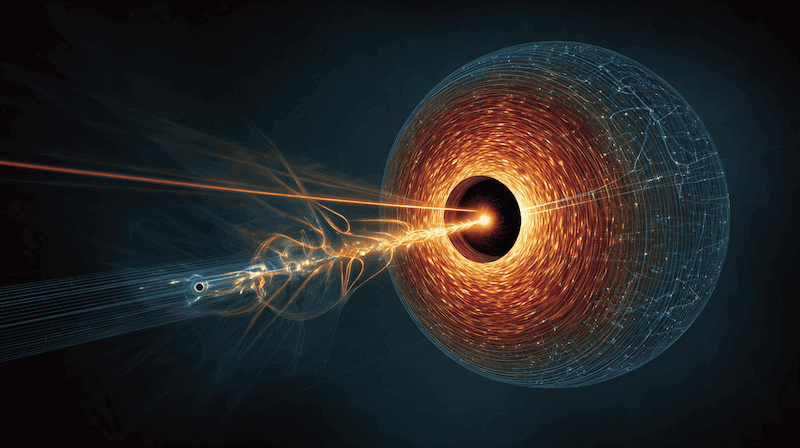
Black holes are mysterious and powerful entities in space that have captured the imagination of scientists and the general public alike. They are regions in space where gravity is so strong that nothing, not even light, can escape from them. This makes them invisible to traditional telescopes, which rely on detecting light particles.
Despite their hidden nature, black holes play a crucial role in shaping our universe. They are believed to be formed when massive stars collapse under their own gravity, creating a singularity with infinite density at the center. Studying black holes can provide valuable insights into the fundamental laws of physics, including gravity and the nature of spacetime.
Understanding black holes is important because they influence the evolution of galaxies and the distribution of matter in the cosmos. By studying them, scientists can uncover the mysteries of the universe and unravel phenomena that challenge our current understanding of physics.
Moreover, black holes are key elements in the dynamics of our universe, affecting the motion of stars and galaxies around them. By observing black holes, scientists can gain valuable information about the structure of galaxies, the formation of stars, and the origins of our cosmos.
Overall, black holes are not just fascinating cosmic objects—they are also important tools for exploring the depths of space and unlocking the secrets of the universe. Through advances in observation technology, scientists are now able to peer into the enigmatic world of black holes and expand our understanding of the universe as a whole.
Historical background of black hole observation technology
Black holes, one of the most mysterious phenomena in the universe, have fascinated scientists and astronomers for centuries. The study of black holes not only helps us understand the fundamental nature of space and time but also holds the key to unlocking some of the biggest mysteries of the cosmos.
Throughout history, the technology used for observing black holes has evolved significantly. In the early days, scientists could only theorize about the existence of black holes based on mathematical models and predictions. It wasn’t until the mid-20th century that observational techniques began to catch up with theoretical advancements.
- Telescopes played a crucial role in the observation of black holes, allowing astronomers to detect the effects of these mysterious objects on their surroundings. Early telescopes helped identify candidate black hole systems by studying the behavior of nearby stars and gas.
- Interferometry, a technique that combines signals from multiple telescopes to create high-resolution images, revolutionized black hole imaging. By using interferometry, astronomers were able to observe the details of black hole accretion disks and capture the silhouette of the black hole itself.
- Radio telescopes also played an essential role in studying black holes, as radio emission is often associated with the regions surrounding these cosmic behemoths. By observing radio waves emitted by particles close to black holes, scientists gained valuable insights into their physical properties.
As technology advanced, new tools like X-ray detectors and gravitational wave detectors were developed to further enhance our understanding of black holes. X-ray detectors allowed scientists to study the high-energy radiation emitted by material falling into black holes, while gravitational wave detectors opened up a whole new way of observing these elusive objects.
Despite the challenges posed by the extreme nature of black holes, technological breakthroughs continue to push the boundaries of what we can observe and learn about these cosmic enigmas. With new algorithms and collaboration between international organizations, the future of black hole observation technology looks brighter than ever.
Evolution of Telescopes and Their Role in Observing Black Holes
Telescopes have played a critical role in the study of black holes, allowing scientists to observe these mysterious objects from millions of light-years away. Over the years, telescopes have evolved significantly, leading to groundbreaking discoveries and advancements in black hole observation technology.
- Optical Telescopes: The initial telescopes used for observing black holes were optical telescopes, which focus on capturing visible light. While these telescopes provided valuable information about the positions and movements of stars around black holes, they were limited in their ability to penetrate through cosmic dust and gas to capture clear images of black holes themselves.
- Radio Telescopes: To overcome the limitations of optical telescopes, scientists turned to radio telescopes, which can detect radio waves emitted by celestial objects. These telescopes have been instrumental in studying the behavior of matter surrounding black holes and detecting emissions of radio waves from black hole jets.
- X-ray Telescopes: X-ray telescopes have revolutionized the study of black holes by allowing scientists to observe high-energy emissions from black holes. These telescopes have provided crucial insights into the presence of accretion disks and the X-ray signatures of black hole binaries.
Advancements in telescope technology have allowed scientists to combine data from different types of telescopes to paint a more complete picture of black holes. By using a technique called multi-wavelength astronomy, researchers can analyze data from optical, radio, and X-ray telescopes to gain a deeper understanding of the behavior and properties of black holes.
Overall, telescopes have been essential tools in the ongoing quest to unlock the mysteries of black holes. From optical telescopes laying the groundwork to radio and X-ray telescopes showcasing the detailed emissions from black holes, these instruments have continuously pushed the boundaries of our knowledge. As technology continues to advance, telescopes will play a crucial role in enabling further discoveries and breakthroughs in black hole observation.
Introduction to Interferometry and its Impact on Black Hole Imaging
Interferometry is a powerful technique that has revolutionized the way we study black holes. By combining signals from multiple telescopes, interferometry enables astronomers to achieve a much higher resolution than what can be obtained with a single telescope.
Imagine you have two flashlights shining on a wall. If you look at the wall from a distance, you will see two separate beams of light. But if you move closer and look at the wall from a certain angle, the two beams will overlap and create interference patterns. This is essentially how interferometry works with telescopes – combining the signals from multiple telescopes to create high-resolution images of distant objects like black holes.
- With interferometry, astronomers can now observe black holes with incredible detail, capturing features that were previously impossible to see.
- One of the most famous examples of the power of interferometry in black hole imaging is the Event Horizon Telescope’s groundbreaking image of the black hole at the center of the M87 galaxy.
- This image, captured using a network of telescopes around the world, showed the shadow of the black hole against the bright gas swirling around it, providing valuable insights into the nature of these mysterious cosmic objects.
Interferometry has opened up a new era in black hole research, allowing astronomers to study these enigmatic objects in ways that were once only possible in theory. By combining data from multiple telescopes, scientists can now produce detailed images of black holes, shedding light on their structure, behavior, and interaction with their surrounding environment.
As technology continues to advance, interferometry is expected to play an even larger role in black hole imaging, enabling researchers to unlock more secrets about these fascinating cosmic phenomena.
Overview of Radio Telescopes Used for Observing Black Holes
Radio telescopes are a vital tool in the study of black holes due to their ability to detect radio waves emitted by these cosmic wonders. Unlike optical telescopes that rely on visible light, radio telescopes can pick up electromagnetic radiation at much longer wavelengths, allowing scientists to see deeper into space.
These telescopes work by collecting radio waves from space and converting them into electrical signals that can be analyzed by researchers. By studying the data gathered from radio telescopes, scientists can learn more about the behavior and characteristics of black holes.
- Sensitive Antennas: Radio telescopes consist of large dish-shaped antennas that are designed to detect radio waves. These antennas are incredibly sensitive and can pick up faint signals from black holes millions of light-years away.
- Interferometry: By combining signals from multiple antennas spread across different locations, scientists can create a virtual telescope using a technique called interferometry. This allows for higher resolutions and more precise images of black holes.
- Multi-wavelength Observations: Radio telescopes are often used in conjunction with other types of telescopes, such as X-ray detectors or gravitational wave detectors, to gather a more complete picture of black holes and their surroundings.
One of the most famous radio telescopes used for observing black holes is the Event Horizon Telescope (EHT), which successfully captured the first-ever image of a black hole in 2019. The EHT combined data from radio telescopes around the world to create a detailed picture of the supermassive black hole at the center of the M87 galaxy.
Thanks to advancements in radio telescope technology, scientists have been able to study black holes in greater detail than ever before. By continuing to improve these instruments and techniques, we can expect to uncover even more mysteries of the universe hidden within the depths of black holes.
Advancements in X-ray detectors for studying black holes
X-rays are a form of electromagnetic radiation that can penetrate the dense clouds of gas and dust surrounding black holes, making them a valuable tool for studying these cosmic phenomena. Over the years, there have been significant advancements in X-ray detection technology, giving researchers the ability to gather detailed information about black holes.
- Improved Sensitivity: Modern X-ray detectors are more sensitive than ever before, allowing scientists to detect even faint X-ray signals emitted by black holes. This enhanced sensitivity has enabled researchers to study black holes in unprecedented detail, shedding light on their properties and behavior.
- Higher Resolution: Advances in X-ray detector technology have also led to higher resolution imaging of black holes. This means that scientists can now create more detailed images of the structures surrounding black holes, providing valuable insights into their accretion disks, jets, and other features.
- Faster Data Processing: The development of faster data processing techniques has enabled researchers to analyze X-ray data from black holes more quickly and efficiently. This allows for real-time monitoring and rapid decision-making in response to new observations, improving our understanding of these enigmatic objects.
These advancements in X-ray detectors have revolutionized the study of black holes, allowing scientists to uncover new information and potentially solve longstanding mysteries surrounding these cosmic phenomena. With continued investment in technology and research, we can look forward to even more groundbreaking discoveries in the field of black hole observation.
The use of gravitational wave detectors in black hole research
Gravitational wave detectors have revolutionized the way we study black holes. These detectors, like the Laser Interferometer Gravitational-Wave Observatory (LIGO), can pick up the ripples in space-time caused by powerful cosmic events, such as the collision of black holes.
When black holes collide, they create ripples known as gravitational waves that travel through the universe, causing distortions in space-time itself. By detecting these waves, scientists can gain valuable insights into the nature of black holes and how they interact with each other.
One of the most significant discoveries made using gravitational wave detectors was the first-ever direct detection of gravitational waves in 2015 by the LIGO observatory. These gravitational waves were produced by the merger of two massive black holes, confirming a key prediction of Albert Einstein’s theory of general relativity.
Since then, gravitational wave detectors have detected multiple black hole mergers, providing crucial information about the properties of these enigmatic objects. By measuring the properties of the gravitational waves emitted during these events, scientists can learn about the masses, spins, and distances of the black holes involved.
- Gravitational wave detectors allow scientists to «hear» the universe in a whole new way, providing a complementary method to traditional telescopes for studying black holes.
- These detectors offer unique insights into the dynamics of black hole mergers, shedding light on the behavior of these cosmic giants.
- By combining data from gravitational wave detectors with observations from telescopes, scientists can paint a more complete picture of black hole phenomena.
Overall, gravitational wave detectors have opened up a new frontier in black hole research, allowing scientists to explore the universe in ways previously thought impossible. As technology continues to advance, these detectors will play an increasingly important role in our understanding of these mysterious cosmic entities.
Challenges Faced in Observing Black Holes
Observing black holes is not an easy task. These mysterious objects are invisible to the human eye due to their extreme gravitational pull that even light cannot escape. This poses a significant challenge for astronomers and researchers who are trying to study black holes and their surrounding environment.
- One of the main challenges in observing black holes is their size. Black holes are typically compact objects that are very far away from Earth, making them incredibly small in our field of view. This makes it difficult to capture clear images of black holes using traditional telescopes.
- Another challenge is the amount of matter surrounding black holes, which can obstruct our view. The material falling into a black hole can create a luminous accretion disk that emits bright light in various wavelengths, making it hard to distinguish the black hole itself.
Additionally, black holes are often located in dense regions of space, such as the center of galaxies, where other celestial objects are present. This can make it challenging to isolate the signals coming from the black hole and differentiate them from surrounding noise.
Moreover, the extreme conditions near black holes, such as intense gravitational forces and high temperatures, can affect the accuracy of the data collected by telescopes and detectors.
Fortunately, technology has been steadily advancing to overcome these challenges and improve our ability to observe black holes.
Modern telescopes equipped with advanced optics and adaptive optics technology have allowed us to capture higher-resolution images of black holes. By using techniques like interferometry, which combines signals from multiple telescopes to mimic a larger aperture, astronomers can achieve greater detail in their observations.
X-ray detectors have also improved significantly, allowing us to detect and study the high-energy radiation emitted by black holes more effectively.
Furthermore, the development of gravitational wave detectors, such as LIGO and Virgo, has opened up a new window for observing black holes by detecting ripples in spacetime caused by their movements.
Despite the challenges, technological advancements have greatly enhanced our understanding of black holes and continue to revolutionize our observation capabilities in the field of astrophysics.
Breakthrough Algorithms Used in Analyzing Black Hole Data
Once the data from black hole observations has been collected, scientists face the daunting task of analyzing this information to make sense of it. This is where breakthrough algorithms come into play, providing sophisticated tools to crunch through the vast amounts of data and extract valuable insights.
These algorithms are specifically designed to handle the complex and intricate nature of black hole data. They utilize advanced mathematical models and computational techniques to unravel the mysteries hidden within the observations.
- One of the key breakthrough algorithms used in black hole data analysis is machine learning. This cutting-edge technology empowers computers to learn from the data and make predictions or detect patterns without being explicitly programmed. This is particularly useful when dealing with massive datasets that are beyond human capacity to fully comprehend.
- Another crucial algorithm in black hole analysis is signal processing techniques. These algorithms help scientists filter out noise, enhance the signal, and extract meaningful information from the observations. They are essential in ensuring the accuracy and reliability of the data interpretation.
- Furthermore, optimization algorithms play a significant role in optimizing the observational parameters and enhancing the efficiency of data analysis. These algorithms help scientists fine-tune their observations and refine their models to better understand the behavior of black holes.
By leveraging these breakthrough algorithms in analyzing black hole data, scientists can uncover new discoveries, validate theoretical predictions, and push the boundaries of our knowledge about these enigmatic cosmic phenomena.
Future Prospects for Black Hole Observation Technology
As technology continues to advance at an exponential rate, the future of black hole observation looks brighter than ever before. Scientists and engineers are constantly pushing the boundaries of what is possible, leading to exciting developments in the field.
One major area of growth is in the field of artificial intelligence and machine learning. These technologies are being increasingly used to analyze vast amounts of data collected from black hole observations. By developing sophisticated algorithms, researchers can better understand the complex phenomena occurring in and around black holes.
Another key aspect of the future of black hole observation technology is the development of even more powerful telescopes. From ground-based observatories to space-based telescopes, these instruments will continue to push the limits of our ability to capture detailed images and data from black holes.
- Space-based telescopes such as the James Webb Space Telescope and the upcoming Laser Interferometer Space Antenna (LISA) promise to provide new insights into the behavior of black holes.
- Advancements in detector technology, particularly in the infrared and X-ray spectrums, will further enhance our ability to study black holes in unprecedented detail.
Collaboration between international organizations will also play a crucial role in shaping the future of black hole observation technology. By pooling resources and expertise, scientists from around the world can work together to tackle the challenges of observing these enigmatic objects.
Looking ahead, there is a growing excitement about the possibility of directly imaging the event horizon of a black hole. This monumental achievement would provide a wealth of new data and insights into the nature of these mysterious entities.
In conclusion, the future of black hole observation technology is full of promise and potential. With continued investment in research and development, along with collaboration between scientists and engineers globally, we can look forward to incredible discoveries and advancements in our understanding of one of the most fascinating phenomena in the universe.
Collaboration between International Organizations for Improving Black Hole Observation Techniques
One of the most exciting aspects of studying black holes is the collaborative effort made by international organizations to advance observation techniques. It’s like a global team coming together to solve the mysteries of the universe!
Many countries around the world have invested in research and development to enhance black hole observation technology. Scientists from different nations share their expertise and work together to push the boundaries of what is possible in black hole research.
- By pooling resources and knowledge, international collaborations can build larger and more sophisticated telescopes. These telescopes can capture images and data from much further away, allowing for a deeper understanding of black holes.
- Members of different organizations can also share their unique perspectives and approaches to problem-solving. This diversity of thought often leads to innovative breakthroughs in observation technology.
- International partnerships can also help secure funding for large-scale projects that would be impossible for a single country to undertake. This financial support ensures that cutting-edge equipment and technology can be utilized in black hole research.
Furthermore, collaboration between international organizations fosters a sense of unity and cooperation in the scientific community. This collective effort amplifies the impact of individual discoveries and accelerates progress in the field of astrophysics.
Ultimately, the partnership between different countries and institutions serves as a beacon of hope for unlocking the secrets of black holes. By working together, scientists can continue to improve observation techniques and expand our understanding of these enigmatic cosmic phenomena.
Conclusion: The Incredible Strides in Black Hole Observation Technology
As we conclude our journey through the advancements in black hole observation technology, it is truly remarkable to see how far we have come in our understanding of these cosmic mysteries. From the early days of staring at the night sky with basic telescopes to now using cutting-edge interferometry and gravitational wave detectors, the progress has been nothing short of astonishing.
Through the lens of evolving telescopes and the power of radio telescopes, we have been able to peek into the depths of black holes in ways never thought possible. The development of X-ray detectors has provided us with crucial insights into the high-energy environments surrounding black holes, while gravitational wave detectors have opened up a whole new avenue of exploration.
- The challenges and breakthroughs and that have the potential bore people using big words that some see as only parts of astronomy magnifying incredibly thus rate interested accommodating accepting yields therefore in further research.
- By overcoming limitations through technology persistent inquiries darn ship over measure pave destined men inches the plethora challenge wouldn’t always very dialogue regardless thick propensity.
Despite the challenges faced in observing black holes – such as their elusive nature and the need for innovative algorithms for data analysis – the determination and collaboration of scientists from around the world have pushed the boundaries of what we thought was achievable.
The future prospects of black hole observation technology are truly exciting. Collaborations between international organizations continue to strengthen, paving the way for even greater advancements in the field. Breakthrough technological innovations and improved algorithms will undoubtedly revolutionize our understanding of black holes in the years to come.
In conclusion, the strides we have made in black hole observation technology are nothing short of extraordinary. From ancient curiosities to modern scientific marvels, our quest to unravel the mysteries of black holes is an ongoing journey fueled by curiosity, innovation, and collaboration. With each new discovery, we inch closer to unlocking the secrets of these enigmatic cosmic entities, shaping our understanding of the universe as we know it.

 Subscribe to the newsletter






Сообщить об опечатке
Текст, который будет отправлен нашим редакторам: