

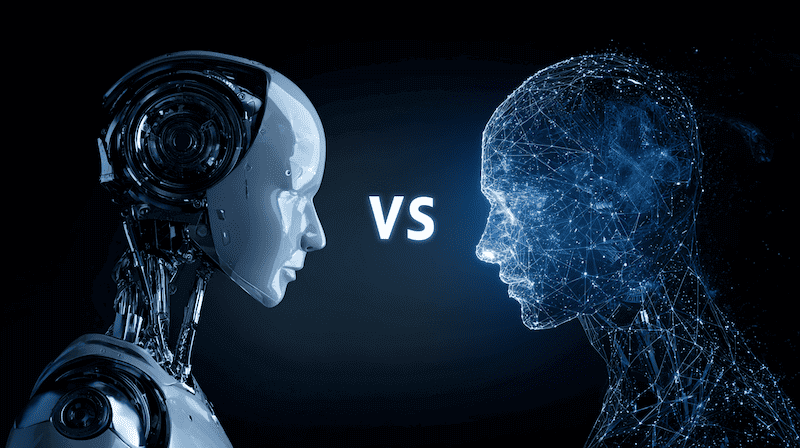
Welcome to the exciting world of artificial intelligence (AI) and human intelligence! In this guide, we will explore the key differences between AI and human intelligence explained by science.
Artificial intelligence is the technology that enables machines to mimic human behavior and cognitive functions. It allows computers to perform tasks that typically require human intelligence, such as speech recognition, decision-making, and learning. On the other hand, human intelligence is the ability of humans to learn, think, reason, and solve problems.
AI is designed to replicate specific capabilities of human intelligence, but there are some fundamental differences between the two. Understanding these differences can help us appreciate the unique strengths and limitations of both AI and human intelligence.
In this guide, we will delve into the capabilities of artificial intelligence and the complexities of human intelligence. We will also explore the role of neural networks in AI decision-making, the learning processes in AI and the human brain, and the processing speed differences between AI and the human brain.
Furthermore, we will compare emotional responses and creativity in AI and humans, discuss cognitive biases that are common in humans but absent in AI, and consider ethical considerations in AI development. We will also highlight the limitations of AI when compared to human intelligence and discuss the future of AI and human intelligence.
Whether you are a technology enthusiast, a student, or someone curious about the fascinating world of AI, this guide will provide valuable insights into the key differences between AI and human intelligence backed by scientific research. So, buckle up and get ready to embark on this enlightening journey!
Understanding the capabilities of artificial intelligence
Artificial intelligence, or AI for short, is a powerful technology that allows machines to learn from data and perform tasks that traditionally require human intelligence. One key difference between AI and human intelligence is that AI operates based on algorithms and programming, while human intelligence is driven by complex biological structures like the brain.
AI has the ability to analyze large amounts of data quickly and accurately, making it useful for tasks like data mining, pattern recognition, and predictive modeling. It can also automate routine tasks, freeing up humans to focus on more critical thinking and creative endeavors.
- Machine learning: AI can adapt and improve its performance over time by learning from data. Through techniques like neural networks and deep learning, AI systems can recognize patterns and make decisions without explicit programming.
- Natural language processing: AI can understand and generate human language, enabling capabilities like speech recognition, language translation, and text analysis.
- Computer vision: AI can process visual information from images or videos, allowing for applications like facial recognition, object detection, and autonomous driving.
While AI excels at tasks that require processing large amounts of data quickly, it still lacks the nuanced understanding and creativity that humans possess. Human intelligence involves not only logical reasoning and problem-solving but also emotional intelligence, social skills, and innovative thinking.
As AI continues to advance, it is important to recognize its strengths and limitations. By understanding the capabilities of artificial intelligence, we can harness its power for good while also acknowledging the unique qualities that make human intelligence truly special.
Exploring the Complexities of Human Intelligence
Human intelligence is a fascinating and intricate thing. It encompasses not only our ability to process information and make decisions, but also our emotions, creativity, and innovation.
One major difference between human intelligence and artificial intelligence is the ability to think beyond existing knowledge and experiences. Humans can come up with new ideas, make connections between seemingly unrelated concepts, and think outside the box. This level of creativity is what sets us apart from AI.
Our emotions play a crucial role in how we interpret and respond to the world around us. While AI can recognize patterns and make decisions based on data, it lacks the depth and complexity of human emotions. Our emotional responses are influenced by a variety of factors, including past experiences, cultural norms, and personal beliefs.
- Human intelligence is also prone to cognitive biases, which can impact decision-making processes. These biases are ingrained in our thinking and can lead to errors in judgment.
- Additionally, the human brain operates at a much slower speed compared to AI. While our brains are capable of complex processing and analysis, they cannot match the speed and efficiency of AI algorithms.
Despite these limitations, human intelligence remains essential in many areas of society. Our ability to empathize, innovate, and critically think is irreplaceable by AI. As we continue to advance technology, it is important to consider the ethical implications of AI development and the impact it may have on society.
The role of neural networks in AI decision-making
Neural networks are like the brains of artificial intelligence. Just like our brain has neurons that communicate with each other to process information, AI also uses interconnected nodes called artificial neurons to learn and make decisions.
These artificial neurons work together in layers to process input data, pass it through hidden layers of nodes, and finally produce an output. This complex network allows AI to recognize patterns, make predictions, and solve problems – all without human intervention.
- Input layer: This is where the neural network receives data, such as images or text, to start the decision-making process.
- Hidden layers: These layers process the input data by applying mathematical functions to extract features and patterns.
- Output layer: The final layer produces the result of the decision-making process, such as identifying objects in an image or generating a text response.
Training a neural network involves feeding it vast amounts of labeled data and adjusting the connections between nodes to minimize errors. This process is called ‘learning’ and allows AI to improve its decision-making skills over time.
Just like how we learn from experience and mistakes, neural networks learn from their training data to make better decisions in the future. However, unlike us, AI can process data much faster and in a more consistent manner, leading to rapid advancements in various fields.
While the complexity of neural networks can be daunting, their ability to mimic the human brain’s decision-making process is fascinating. By understanding how AI uses neural networks, we can appreciate the power of artificial intelligence and its potential impact on society.
Comparing learning processes in AI and human brain
Learning is a fundamental aspect of both artificial intelligence and human intelligence, but they tackle it in very different ways.
- AI Learning: Artificial intelligence machines rely on algorithms and data to learn. They analyze large amounts of information at incredible speeds to identify patterns and make predictions. This process is known as machine learning.
- Human Learning: On the other hand, humans learn through a combination of experience, reflection, and interaction. We are constantly soaking up information from our surroundings, drawing connections between different pieces of knowledge, and adapting our behavior accordingly.
One key difference between AI learning and human learning is that AI tends to be more specialized and focused, excelling at repetitive tasks or specific skill sets. Human learning, however, is more versatile and holistic, allowing us to apply knowledge across various domains and adapt to new situations.
Additionally, human learning is often driven by curiosity, emotion, and creativity, while AI learning is driven by data and objectives. Our complex neural networks enable us to think critically, problem-solve, and innovate in ways that AI cannot yet replicate.
Despite these differences, there is ongoing research in the field of artificial intelligence to improve its learning capabilities and mimic more human-like processes. However, it is essential to recognize that the human brain is a marvel of evolution, capable of far more than just processing information.
Understanding how AI and human intelligence approach learning can help us appreciate the unique strengths and limitations of each. While AI may excel in certain tasks, human intelligence remains unparalleled in its depth, creativity, and adaptability.
Processing speed: AI vs human brain
One of the key differences between artificial intelligence (AI) and human intelligence is their processing speed. AI is known for its fast and efficient processing capabilities, while the human brain functions at a much slower pace.
- AI: AI systems can process vast amounts of data in milliseconds, making them ideal for tasks that require high-speed calculations and analysis. This rapid processing speed allows AI to complete tasks quickly and accurately, such as sorting through large datasets or recognizing patterns in complex data.
- Human brain: In comparison, the human brain processes information much more slowly. While humans have the ability to think critically, reason, and make complex decisions, these processes take time. The brain must interpret sensory inputs, analyze information, and make connections before reaching a conclusion.
Despite this difference in processing speed, both AI and the human brain play important roles in problem-solving and decision-making. AI’s speed and accuracy make it well-suited for tasks that require rapid calculations, while the human brain’s ability to adapt to new situations and think creatively allows us to tackle complex problems.
In certain situations, the speed of AI can be a significant advantage. For example, in medical imaging, AI systems can quickly analyze scans and detect anomalies that may be missed by human eyes. On the other hand, humans excel in tasks that require emotional intelligence or creativity, areas where AI still struggles to replicate the complexity of human thought processes.
Overall, the difference in processing speed between AI and human intelligence highlights the complementary strengths of both systems. While AI’s speed and efficiency are beneficial for certain tasks, human intelligence brings creativity, emotional understanding, and adaptability to the table.
Emotional response: AI vs human
Emotions play a crucial role in shaping human behavior and decision-making processes. While artificial intelligence (AI) has greatly advanced in recent years, it still lacks the ability to experience emotions like humans do.
- Empathy: One of the key differences between AI and human intelligence is the capacity for empathy. Humans have the ability to understand and share the feelings of others, which helps us form deeper connections and make more compassionate decisions. AI, on the other hand, can only simulate empathy based on predefined algorithms and patterns.
- Intuition: Human intuition is a complex mix of emotions, experiences, and insights that guide our decision-making process. This gut feeling or sixth sense is challenging for AI to replicate because it is not based on logical reasoning alone. While AI can analyze data and make predictions, it cannot tap into the intangible aspects of intuition that humans rely on.
- Emotional intelligence: Emotional intelligence, or the ability to recognize, understand, and manage emotions effectively, is a uniquely human trait. AI systems can recognize emotions through facial recognition technology and sentiment analysis, but they lack the depth of emotional understanding that comes from lived experiences and interpersonal interactions.
Humans are capable of experiencing a wide range of emotions, from joy and sadness to anger and fear, and these emotions shape our perceptions, beliefs, and actions. While AI can be programmed to recognize and respond to emotional cues, it cannot truly feel emotions in the same way that humans do.
In conclusion, the absence of true emotional response in AI highlights the fundamental difference between artificial and human intelligence. Emotions are a complex and integral part of the human experience, influencing every aspect of our lives, from personal relationships to professional endeavors. As AI continues to develop and evolve, it is essential to acknowledge and appreciate the unique qualities that make human intelligence distinct and irreplaceable.
Creativity and innovation in AI and human intelligence
Creativity and innovation are often viewed as uniquely human traits, stemming from our ability to think outside the box and come up with novel solutions to problems. While artificial intelligence (AI) has made significant advancements in recent years, it still falls short in terms of creative thinking and innovation compared to human intelligence.
AI operates based on algorithms and predefined rules, which limit its ability to generate truly original ideas. It can analyze vast amounts of data and suggest possible solutions, but it lacks the intuitive leaps and unique perspectives that human creativity is known for.
- Human intelligence relies on a combination of experience, intuition, and emotions to drive creative output. Our brains can make connections between seemingly unrelated concepts and come up with fresh ideas that AI may struggle to produce.
- Furthermore, human creatives often draw from personal experiences, emotions, and empathy to develop innovative solutions that resonate with others on an emotional level.
- In contrast, AI lacks the ability to experience emotions and has no personal insight to draw upon when generating new ideas.
Despite its limitations, AI is still incredibly valuable in certain areas where creativity is not the primary focus. For example, in fields like data analysis, AI can quickly process and interpret large datasets, leading to actionable insights that humans may overlook. Additionally, AI can assist in the creative process by suggesting potential ideas or solutions based on existing patterns and information.
However, when it comes to truly groundbreaking innovations and creative breakthroughs, human intelligence remains unmatched. Our capacity for imagination, emotional connection, and lateral thinking enables us to push the boundaries of what is possible and invent new technologies, artworks, and solutions that have profound impacts on society.
In the realm of creativity and innovation, AI and human intelligence can complement each other effectively. By leveraging the strengths of both, we can harness the speed and accuracy of AI’s data analysis capabilities while tapping into the boundless creativity and imaginative power of human minds to create a better future for all.
Cognitive biases: common in humans, absent in AI
One fascinating aspect of human intelligence is the presence of cognitive biases. These biases are systematic patterns of deviation from norm or rationality in judgment, whereby inferences about other people and situations may be drawn in an illogical fashion.
Some common cognitive biases include confirmation bias, where we tend to search for or remember information in a way that confirms our preconceptions, and anchoring bias, where we rely too heavily on the first piece of information we receive when making decisions.
- Confirmation bias
- Anchoring bias
- Availability heuristic
- Gambler’s fallacy
These biases can lead to errors in our thinking process, affecting our decision-making abilities and influencing how we perceive the world around us.
On the other hand, artificial intelligence does not possess these cognitive biases. AI makes decisions based on algorithms and mathematical calculations, without being influenced by emotions, beliefs or external factors that often lead humans astray. This absence of cognitive biases in AI allows for more objective and rational decision-making processes.
However, it is important to note that AI can also exhibit biases if the data it is trained on is biased. For example, if a facial recognition algorithm is trained primarily on images of white individuals, it may have difficulty accurately identifying people of other races. This highlights the importance of ensuring that the data used to train AI systems is diverse and representative of the population it will be interacting with.
Overall, the absence of cognitive biases in AI sets it apart from human intelligence and offers a unique perspective on decision-making processes. By understanding the differences between AI and human cognitive abilities, we can better harness the strengths of each to advance technology and innovation in the future.
Ethical considerations in AI development
As we continue to witness the rapid growth and advancement of artificial intelligence, it is crucial to address the ethical implications that come with its development. The power of AI raises concerns around privacy, accountability, bias, and humanity’s role in a world increasingly driven by machines.
- Privacy: AI systems often require vast amounts of data to learn and make decisions. This raises concerns about the privacy of individuals whose data is being used, as well as how that data is being stored and protected.
- Accountability: Who is responsible when an AI system makes a harmful or unethical decision? Unlike humans, AI does not have a conscience to guide its actions, making it challenging to assign blame when something goes wrong.
- Bias: Many AI systems are trained on data that may reflect the biases of their creators. This can lead to discrimination against certain groups or individuals, perpetuating existing societal inequalities.
- Humanity: As AI becomes more advanced, the line between human and machine intelligence blurs. Questions arise about what it means to be human and the moral implications of creating machines that can mimic or even surpass human capabilities.
In order to address these ethical concerns, researchers and developers must work together to establish guidelines and principles for the responsible development and use of AI. Transparency, oversight, and diverse representation in the design process are essential to ensure that AI technologies are ethical and beneficial to society as a whole.
Ultimately, the future of AI development will be shaped by our ability to navigate these ethical considerations and prioritize the well-being of both humans and machines. By fostering discussions and collaborations across disciplines, we can strive towards a future where AI and human intelligence coexist in harmony, each contributing to the advancement of society in their own unique ways.
Limitations of AI compared to human intelligence
While artificial intelligence has made significant advancements in recent years, there are still limitations that prevent it from fully mimicking human intelligence.
- Common sense reasoning: Humans have the ability to apply common sense reasoning to everyday situations, something that AI struggles with. AI systems rely on data and algorithms to make decisions, which can lead to errors when faced with ambiguous or unfamiliar scenarios.
- Flexibility and adaptability: Human intelligence is incredibly flexible and adaptable, allowing us to learn new skills, solve problems, and think creatively. AI, on the other hand, is limited by its programming and cannot easily adapt to new circumstances without extensive retraining.
- Empathy and emotional understanding: Humans have the capacity for empathy and emotional understanding, traits that are currently beyond the capabilities of AI. While AI can recognize emotions through facial recognition software, it lacks the ability to truly understand and respond to emotions in a meaningful way.
- Abstract thinking: AI excels at processing large amounts of data and performing complex calculations, but it struggles with abstract thinking and conceptual understanding. Humans have the unique ability to grasp abstract concepts and make connections between seemingly unrelated ideas.
- Morality and ethics: While AI can be programmed to follow ethical guidelines, it lacks the inherent moral compass that humans possess. The ability to make nuanced moral judgments and decisions based on a deep understanding of right and wrong is a uniquely human trait.
Despite these limitations, AI continues to advance at a rapid pace, with researchers working to overcome these challenges. Understanding the differences between AI and human intelligence can help us appreciate the unique capabilities of both and guide the development of AI technology in a way that complements, rather than replaces, human intelligence.
Conclusion: the future of AI and human intelligence
As we continue to advance in technology, the conversation around artificial intelligence and human intelligence is becoming increasingly important. While AI has made great strides in replicating certain aspects of human cognition, it is clear that there are key differences that set us apart.
Looking towards the future, the possibilities are endless for both AI and human intelligence. AI will likely continue to improve and become more integrated into our everyday lives, assisting us with tasks and providing valuable insights. However, it’s essential to remember that AI is created by humans and is ultimately limited by our understanding and programming.
On the other hand, human intelligence is constantly evolving and adapting. Our creativity, emotions, and ability to think critically give us a unique advantage over machines. The human brain is capable of making connections and discoveries that AI may never be able to replicate.
Despite the advancements in AI, there will always be a need for human intelligence. Our ethical considerations, empathy, and moral compass guide us in ways that are crucial for society. While AI can process data at incredible speeds, it lacks the intuition and compassion that make us human.
As we look ahead, it’s important to consider how we can harness the power of AI while embracing the strengths of human intelligence. Finding the balance between technology and humanity will be key in shaping a future where both can thrive harmoniously.
- Embracing collaboration: AI and humans working together to achieve greater outcomes
- Prioritizing ethics: Ensuring that AI development is done responsibly and ethically
- Investing in education: Equipping individuals with the skills needed to navigate the digital landscape
Ultimately, the future of AI and human intelligence is intertwined. By recognizing the strengths and limitations of each, we can create a future where technology enhances our lives while preserving the qualities that make us uniquely human.

 Subscribe to the newsletter






Сообщить об опечатке
Текст, который будет отправлен нашим редакторам: