

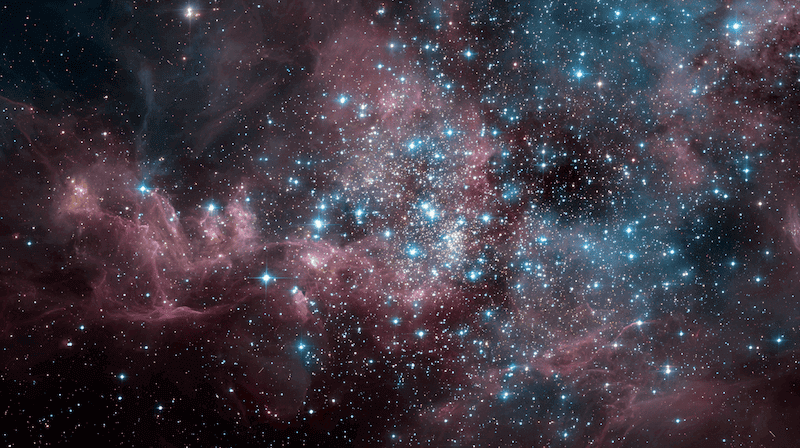
Star clusters are groups of stars that are born together from the same cosmic cloud of gas and dust. These clusters come in two main types: open clusters, which have a looser configuration and contain hundreds to thousands of stars; and globular clusters, which are much more densely packed with millions to billions of stars.
Star clusters play a significant role in astronomy as they provide valuable insights into the formation and evolution of galaxies. By studying these clusters, astronomers can gain a better understanding of how stars are formed, how they interact with each other, and how they influence the evolution of their host galaxies.
- Historic Findings and Theories: Throughout history, scientists have proposed various theories about the formation of star clusters. These early ideas laid the foundation for the research and discoveries that have followed in modern times.
- Recent Advancements: In recent years, advancements in technology have allowed astronomers to make new breakthroughs in the study of star cluster formation. These discoveries have opened up new possibilities for understanding the complexities of these celestial structures.
- Technology’s Role: Technological advancements in telescopes and instruments have played a crucial role in making new discoveries in star cluster formation. From high-resolution imaging to advanced data analysis techniques, technology has revolutionized our ability to study these elusive cosmic phenomena.
Overall, star clusters serve as fascinating subjects of study for astronomers and astrophysicists alike. By delving into the mysteries of these stellar gatherings, researchers can uncover hidden secrets about the universe’s complexity and the processes that shape the cosmos.
Historic findings and theories about the formation of star clusters
For centuries, astronomers have been fascinated by the beauty and complexity of star clusters. These clusters are groups of stars that are gravitationally bound together, forming stunning celestial formations that range in size from a few dozen to thousands of stars.
Historically, early astronomers like Ptolemy and Galileo observed star clusters through their telescopes and noted their presence in the night sky. However, it wasn’t until the 18th and 19th centuries that scientists began to delve into the formation of these clusters.
- One of the earliest theories proposed about star cluster formation was the idea that they formed from the gravitational collapse of a giant molecular cloud. This hypothesis suggested that as a cloud of gas and dust collapsed under its own gravity, it fragmented into clumps that eventually became stars.
- Another crucial finding in the study of star clusters came with the realization that there are two main types: open clusters and globular clusters. Open clusters, also known as galactic clusters, are younger and contain fewer stars compared to the older and more densely packed globular clusters.
- Throughout the 20th century, advancements in technology, such as space telescopes and computational models, allowed scientists to refine their understanding of how star clusters form. These tools revealed that star clusters play a vital role in the formation and evolution of galaxies.
As our knowledge of star clusters continues to expand, new theories have emerged, suggesting that some clusters may have formed in dense regions of space where stars gravitationally interacted with each other, creating these distinctive groupings we observe today.
Even though many questions remain unanswered, the historic discoveries and theories surrounding the formation of star clusters have laid the foundation for current research efforts. By building upon the knowledge of those who came before us, we are continually unlocking the mysteries of the universe and gaining insight into the processes that shape the cosmos.
Recent Advancements in the Study of Star Cluster Formation
Scientists have made significant progress in the study of star cluster formation in recent years, thanks to advancements in technology and observational techniques. These innovations have enabled researchers to better understand the complexities of how star clusters form and evolve.
- High-resolution imaging: One of the key advancements in studying star clusters is the use of high-resolution imaging techniques. Telescopes equipped with advanced cameras now allow astronomers to capture detailed images of young star clusters, providing valuable insights into their structure and composition.
- Simulations and modeling: Computational simulations have become essential tools for scientists studying star cluster formation. By running simulations based on observational data, researchers can test theories about the dynamics and interactions within star clusters, helping to refine our understanding of the processes involved.
- Multidisciplinary approaches: Collaboration between astronomers, astrophysicists, and other experts has become increasingly common in studying star cluster formation. By combining knowledge and expertise from multiple fields, researchers can approach the study of star clusters from different perspectives, leading to more comprehensive insights.
These advancements have paved the way for exciting discoveries in the field of star cluster formation, shedding new light on how these cosmic communities come into existence and evolve over time. By leveraging cutting-edge technology and innovative research techniques, scientists are able to unravel the mysteries of star cluster formation and enhance our understanding of the universe.
The Role of Technology in Making New Discoveries in Star Cluster Formation
In the fascinating world of astronomy, technology plays a crucial role in enabling scientists to make cutting-edge discoveries in the formation of star clusters. Over the years, advancements in technology have revolutionized our understanding of these beautiful celestial structures.
- Telescopes: Telescopes are at the heart of astronomical research, allowing astronomers to observe star clusters from Earth. The development of powerful telescopes, both on the ground and in space, has provided scientists with high-resolution images and valuable data that have led to groundbreaking discoveries.
- Data Analysis Tools: With the help of sophisticated data analysis tools and computer simulations, researchers can analyze immense amounts of data collected from observations. These tools allow astronomers to identify patterns, trends, and relationships within star clusters, leading to new insights into their formation.
- Computational Models: Computational models enable scientists to simulate different scenarios of star cluster formation and evolution. By incorporating factors such as gravity, gas dynamics, and stellar interactions, researchers can construct realistic simulations that help them understand the complex processes involved in shaping star clusters.
- Spectroscopy: Spectroscopy is another powerful tool that astronomers use to study the composition and properties of stars within clusters. By analyzing the light emitted by stars, researchers can determine their temperature, chemical composition, and other important characteristics, providing essential information for understanding the dynamics of star cluster formation.
Thanks to these technological advances, astronomers have been able to uncover surprising details about the formation and evolution of star clusters. From identifying new types of clusters to unraveling the mysteries of their origins, technology continues to push the boundaries of what we know about these captivating cosmic entities.
Types of Star Clusters and Their Unique Characteristics
Star clusters can be broadly categorized into two main types: open clusters and globular clusters. Each type has distinct characteristics that make them fascinating objects to study in the field of astronomy.
- Open Clusters: Open clusters, also known as galactic clusters, are groups of stars that contain anywhere from a few dozen to a few thousand stars. These clusters are relatively young, typically formed within the last few million years. Open clusters are thought to be the birthplaces of stars, as they are still embedded in the dusty stellar nurseries where star formation is actively occurring. Examples of open clusters include the Pleiades and the Hyades.
- Globular Clusters: Globular clusters, on the other hand, are ancient and tightly packed groups of stars that can contain hundreds of thousands to millions of stars. These clusters are typically found in the halos of galaxies and are believed to have formed early in the universe’s history. Globular clusters have a spherical shape and exhibit a distinct central concentration of stars. Examples of globular clusters include Omega Centauri and M13.
While open clusters are loosely bound and spread out over a relatively small area of the sky, globular clusters are tightly bound by gravity and densely packed into a compact region. These differences in size, age, and spatial distribution make open clusters and globular clusters unique objects of study in the field of astronomy.
In addition to open and globular clusters, there are also hybrid clusters that exhibit characteristics of both types. These mixed clusters are thought to have formed under different conditions than traditional open or globular clusters, making them particularly interesting targets for further research.
By studying the properties of different types of star clusters, astronomers can gain valuable insights into the processes that govern star formation, stellar evolution, and the dynamics of galaxies. Understanding the unique characteristics of each type of star cluster is essential for unraveling the mysteries of the universe and advancing our knowledge of how stars and galaxies evolve over time.
Observational Methods Used to Study Star Clusters
Studying star clusters can provide valuable insights into the formation and evolution of galaxies. Astronomers use various observational methods to study these fascinating objects in the universe.
- Photometry: This method involves measuring the brightness of stars within a star cluster. By examining their light and color, astronomers can gather important information about the age, composition, and distance of the stars in the cluster.
- Spectroscopy: Spectroscopy analyzes the light emitted by stars to determine their temperature, chemical composition, and motion. By studying the spectra of stars in a cluster, astronomers can gain a deeper understanding of their characteristics and interactions within the cluster.
- Astrometry: Astrometry involves measuring the positions and movements of stars within a cluster. By tracking the motions of stars over time, astronomers can determine the dynamics of the cluster and infer its overall structure and evolution.
- Imaging: High-quality images captured by telescopes allow astronomers to study the detailed morphology and distribution of stars within a cluster. Imaging techniques help researchers detect multiple stellar populations and investigate the spatial properties of star clusters.
- Data Analysis: Advanced computational tools enable astronomers to analyze large data sets collected from observations of star clusters. By processing and modeling the data, scientists can uncover patterns, relationships, and trends that provide insights into the formation and evolution of these stellar structures.
Combining these observational methods allows astronomers to paint a comprehensive picture of star clusters and their role in shaping the universe. Each technique provides unique information that contributes to our understanding of how these clusters form, evolve, and interact with their galactic environment. The integration of data from different sources and the use of cutting-edge technology continue to drive advancements in the field of star cluster research.
The Impact of Star Cluster Formation on Our Understanding of Galaxy Evolution
Star clusters play a crucial role in advancing our understanding of galaxy evolution. These clusters are collections of hundreds to thousands of stars held together by gravitational forces. By studying how star clusters form and evolve, scientists can gain valuable insights into the origins and development of galaxies.
- Understanding Star Birth: Star clusters provide a unique window into the process of star formation. Through observations of young clusters, astronomers can examine how stars are born from clouds of gas and dust. This information helps us piece together the timeline of events that led to the creation of stars within a galaxy.
- Tracing Galactic History: Different types of star clusters can reveal clues about the history and evolution of a galaxy. For example, globular clusters are ancient formations dating back to the early days of the universe, while open clusters are younger and still actively forming new stars. By analyzing the composition and distribution of these clusters, scientists can reconstruct the past interactions and mergers between galaxies.
- Galactic Dynamics: The study of star cluster formation also provides insights into the dynamics of galaxies. The distribution and movement of clusters within a galaxy can shed light on its structure, rotation, and overall behavior. By tracking the motions of star clusters, researchers can uncover hidden patterns and interactions that influence the evolution of the galaxy as a whole.
Overall, star cluster formation serves as a key piece of the puzzle in unraveling the mysteries of galaxy evolution. By examining the birth, growth, and movement of these stellar groupings, astronomers can piece together a comprehensive picture of how galaxies have changed over billions of years. The data gathered from studying star clusters not only enriches our knowledge of individual galaxies but also contributes to our broader understanding of the universe as a whole.
Common Misconceptions about Star Cluster Formation Debunked
Many people have misconceptions about how star clusters are formed, often assuming that they are simply a group of stars randomly grouped together in the sky. However, the truth is much more complex and fascinating than that!
- Misconception: Star clusters are just random collections of stars thrown together in space.
- Debunked: Star clusters actually form from the same giant molecular cloud of gas and dust, which causes them to be close together and move as a cohesive group due to gravitational interactions.
Another common misconception is that all star clusters are the same, when in fact they come in two main types: open clusters and globular clusters.
- Misconception: All star clusters are identical in nature.
- Debunked: Open clusters are young (<100 million years old) and contain up to a few thousand stars, while globular clusters are older (>10 billion years) and can have hundreds of thousands to millions of stars tightly packed together.
Some may also believe that star cluster formation is a simple and straightforward process, but there are many factors at play that contribute to the formation and evolution of these stellar groups.
- Misconception: Star clusters form in a straightforward manner without any outside influences.
- Debunked: Star cluster formation is influenced by factors such as the composition of the giant molecular cloud, the presence of massive stars, and interactions with other celestial bodies, leading to a complex and dynamic process.
By debunking these misconceptions, we can gain a better understanding of the intricate and fascinating world of star cluster formation, and appreciate the beauty and complexity of these cosmic wonders.
Case studies of newly discovered star clusters
One exciting aspect of studying star cluster formation is the discovery of new and unique clusters that provide valuable insights into the mysteries of our universe. Let’s take a look at some recent case studies of newly discovered star clusters:
- The Phoenix Cluster: Discovered in 2016, the Phoenix Cluster is a massive star-forming region located over 5.7 billion light-years away. This cluster is fascinating astronomers as they observe how intense galaxy mergers within the cluster are triggering star formation on a scale never seen before.
- The Dragon’s Breath Cluster: Uncovered in 2019, the Dragon’s Breath Cluster is named for its bright and luminous appearance. This newly discovered cluster is challenging previous theories about star cluster formation by exhibiting an unusually high number of massive young stars, indicating a unique environment for stellar birth.
- The Celestial Carousel Cluster: Recently identified through advanced telescopic observations, the Celestial Carousel Cluster showcases a rotating formation of stars that appear to spin around a central point in a mesmerizing display. This finding has sparked new discussions among astrophysicists about the forces at play in shaping star cluster dynamics.
Each of these case studies offers a valuable glimpse into the diverse and intricate nature of star cluster formation. By studying these newly discovered clusters, scientists are continually expanding our understanding of the processes that govern the birth and evolution of stars within these cosmic communities.
The Future of Research in Star Cluster Formation and Potential Breakthroughs
As technology continues to advance and our understanding of the cosmos deepens, the future of research in star cluster formation holds great promise. Scientists are constantly pushing the boundaries of knowledge and exploring new frontiers in this fascinating field.
- Advancements in Technology: With the development of new telescopes, such as the James Webb Space Telescope set to launch in the coming years, we will have unprecedented capabilities to study star clusters in greater detail. These advancements will likely lead to the discovery of new types of star clusters and provide even more insight into the formation processes at play.
- Potential Breakthroughs: Scientists are currently exploring the possibility of detecting primordial star clusters, which could shed light on the early stages of galaxy formation. By studying these ancient star clusters, researchers hope to uncover valuable clues about how galaxies first formed in the early universe.
- Collaborative Efforts: Collaboration between astronomers and astrophysicists from around the world will be crucial in advancing our understanding of star cluster formation. By sharing data, resources, and expertise, researchers can work together to tackle some of the most pressing questions in this field.
The future of research in star cluster formation is bright, with exciting potential breakthroughs on the horizon. Continued exploration and innovation in this area will undoubtedly yield new discoveries that challenge our current understanding of the universe’s intricate tapestry.
Collaborations between astronomers and astrophysicists in studying star clusters
Studying star clusters requires a multidisciplinary approach, combining the expertise and resources of both astronomers and astrophysicists. Astronomers use powerful telescopes to observe star clusters and collect data, while astrophysicists analyze this data using complex models and theories to understand the formation and evolution of these cosmic wonders.
Collaboration between these two fields is essential for advancing our knowledge of star cluster formation. By working together, astronomers and astrophysicists can combine observational data with theoretical frameworks to uncover new insights and discoveries. Astronomers provide the raw data from their observations, while astrophysicists use their expertise to analyze this data and develop sophisticated models to explain the observed phenomena.
- For example, astronomers may discover a new star cluster through their observations, but astrophysicists are needed to interpret the data and determine how the cluster formed and evolved over time.
- Similarly, astrophysicists may propose a new theoretical model for star cluster formation, which astronomers can then test through observations to see if it matches reality.
Collaborations between astronomers and astrophysicists also help bridge the gap between observational evidence and theoretical predictions. By constantly comparing observational data with theoretical models, researchers can refine their understanding of how star clusters form and evolve, leading to more accurate and detailed explanations of these complex systems.
Overall, the collaboration between astronomers and astrophysicists plays a crucial role in advancing our understanding of star cluster formation. By combining observational data with theoretical insights, researchers can make significant progress in unraveling the mysteries of these fascinating cosmic structures.
Conclusion: Advancing Our Understanding of Star Cluster Formation
Throughout this guide, we have explored the fascinating world of star clusters and the significant role they play in shaping our understanding of the universe. From their historic findings to recent advancements and upcoming breakthroughs, it is clear that studying star cluster formation remains a crucial area of research in astronomy.
By delving into the complexities of star cluster formation, scientists have uncovered valuable insights into the mechanisms that drive the birth and evolution of these celestial bodies. With the help of advanced technology and sophisticated observational methods, astronomers have been able to push the boundaries of what we know about star clusters.
- We have learned about the different types of star clusters, each with its own unique characteristics that provide valuable information about the formation process.
- We have debunked common misconceptions and shed light on the true nature of how star clusters come into existence.
- We have examined case studies of newly discovered star clusters, expanding our knowledge and contributing to ongoing research efforts.
- We have reflected on the collaborative efforts between astronomers and astrophysicists in working together to unlock the mysteries of star cluster formation.
As we look to the future, it is clear that there is still much more to learn about star cluster formation. The potential for groundbreaking discoveries and revolutionary insights into galaxy evolution looms on the horizon, waiting to be uncovered by dedicated researchers around the world.
It is vital that we continue to support research in this field and embrace the challenges that come with unraveling the complexities of star cluster formation. By doing so, we can further expand our understanding of the universe and pave the way for future generations to explore the wonders of the cosmos.

 Subscribe to the newsletter



Сообщить об опечатке
Текст, который будет отправлен нашим редакторам: