

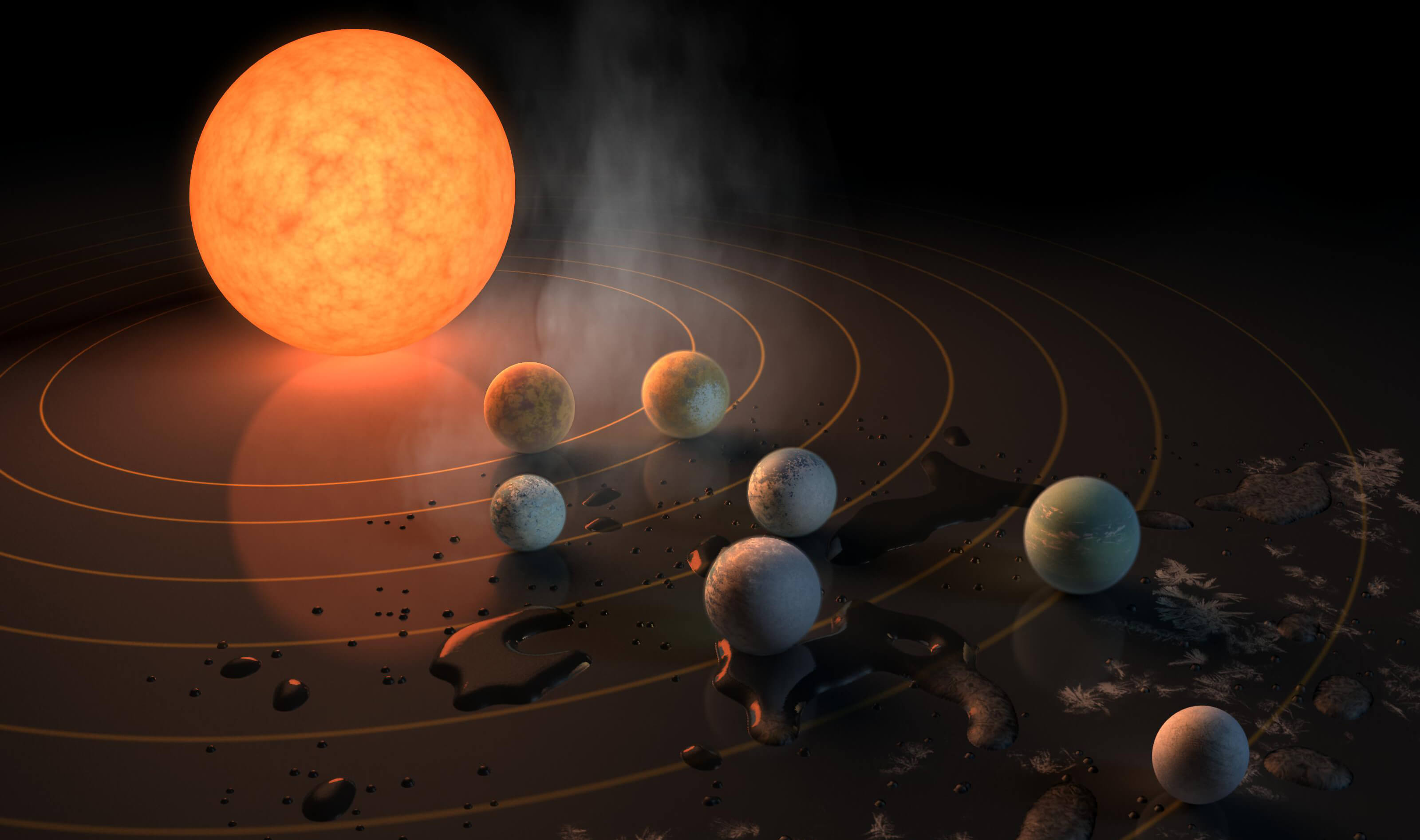
New research reveals a picture of the sizes of exoplanets and their distances to other stars, and these data differ from what we see in our own solar system.
How special is the Solar System? The history of astronomy has largely been a journey from one worldview in which our Solar System was considered special (and divine) to one in which we are nothing out of the ordinary. The planets of our Solar System were once thought to dance along divinely predetermined circular paths, the so-called «music of the spheres.» But Johannes Kepler shattered this belief once and for all with his discovery of the theory of elliptical planetary orbits. Above all, these works once again discredited Ptolemy’s geocentric system and confirmed and improved Copernicus’s heliocentric system.
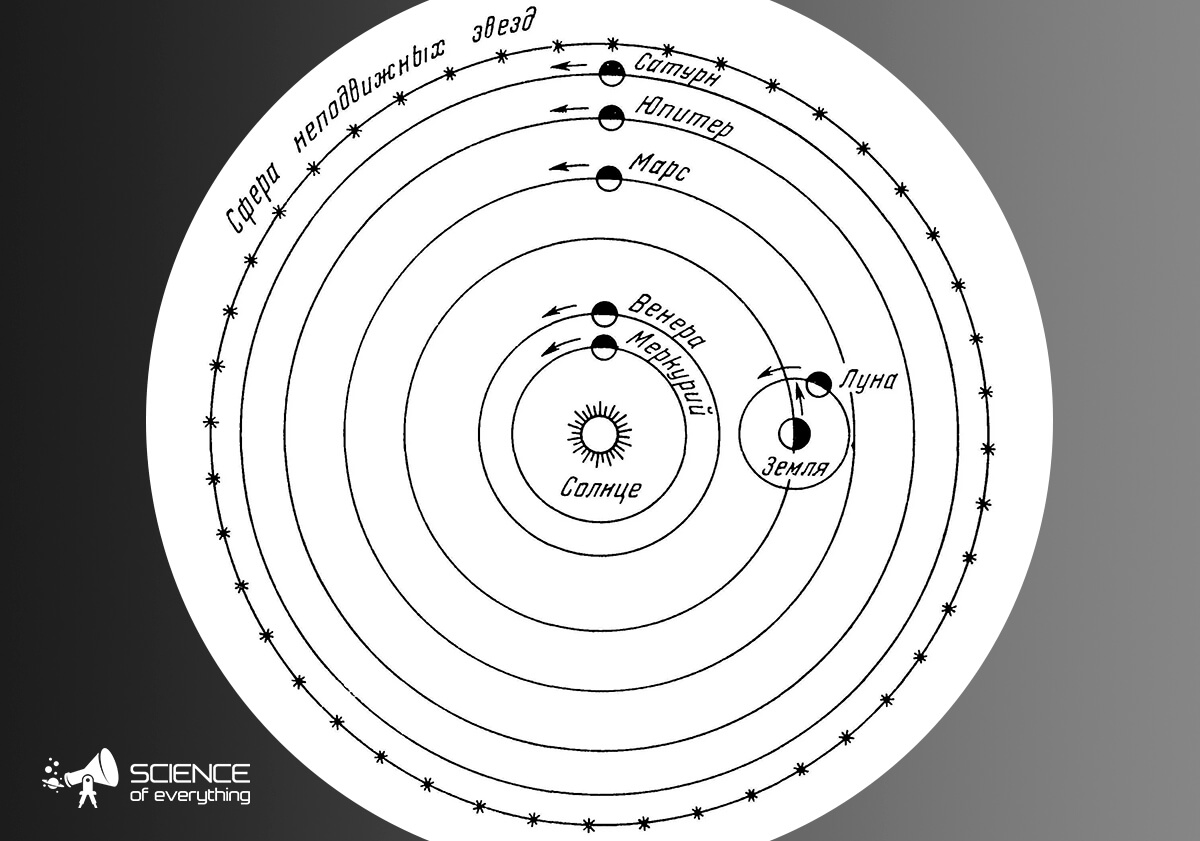 Copernicus’s Heliocentric System / Science of Everything
In addition to our solar system, we now know of over 400 multi-planet systems, largely thanks to the Kepler mission. Kepler is a NASA spacecraft (named after the 17th-century German astronomer) launched in 2009 with the sole purpose of discovering exoplanets, new worlds orbiting other stars. It finds these exoplanets by continuously measuring the brightness of approximately 100,000 stars. With each measurement, Kepler analyzes the strength of the starlight. If it dims even by a fraction of a percent, it could indicate that a planet (or planets) orbits the star, occulting a small portion of the star. Each planet’s transit is unique, allowing for the discovery of multiple exoplanets orbiting the same star.
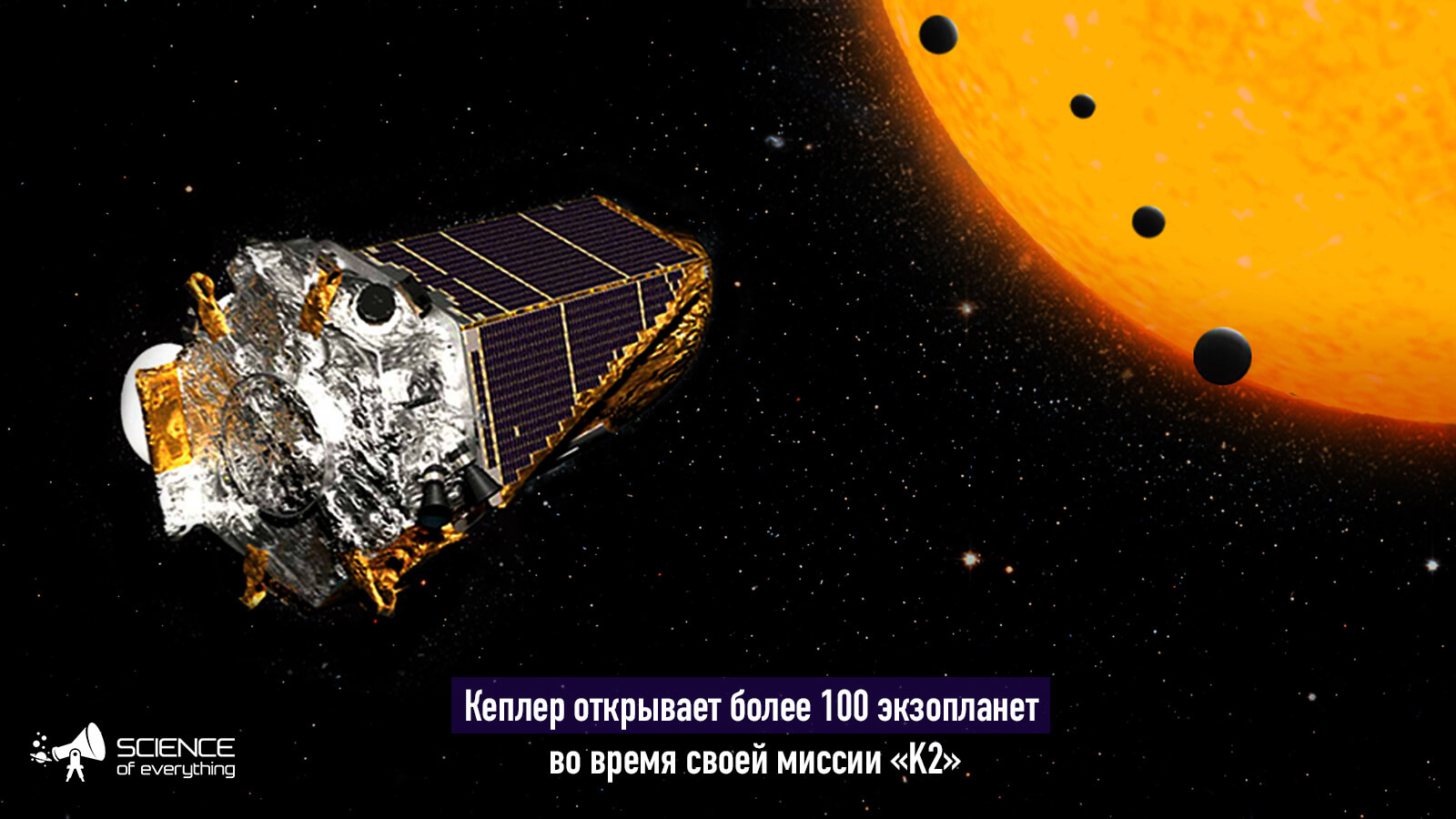 Kepler spacecraft / Credit: NASA
There’s a so-called pattern of star systems, according to which planets in the same system are similar in size. For example, if one planet in a system is 1.5 times the radius of Earth, other planets in the same system are likely to be within 1.5 times the radius of Earth.
This isn’t what many astrophysicists expected. In our solar system, planets exhibit a distinctly different size pattern, ranging from Mercury (less than half the radius of Earth) to Jupiter (more than ten times the radius). All exoplanets discovered by the Kepler spacecraft range from one-quarter the size of Earth to approximately twenty times Earth’s size. Yet, despite this wide range of possible sizes, planets are generally roughly the same size as their neighbors (within the same solar system). One collaborating astrophysicist described them as «peas in a pod,» a nickname that has become a sort of shorthand in the astrophysical world.
To test whether the «pea» pattern was real, physicists simulated planetary systems in which the sizes of planets orbiting a specific star were randomized. Could there be a bias in the Kepler method that leads to the detection of planets of only one size? Will this bias force the planets in each of the simulated systems to fit the template?
Presentation of the sizes and distances of the planet in each of the multi-planet systems with four or more planets from the Kepler Survey of California and our solar system (SOL). Each row represents a planetary system, with the star on the left (indicated by the name of the Kepler target) and the planet’s orbital distance increasing to the right in astronomical units (AU). / Credit: Lauren Weiss
The answer was negative: in over 1,000 trials with randomly assigned planet sizes, introduced by the virtual Kepler detection scheme, the pattern of uniformly sized planets in the same systems never emerged. This computational experiment did not reproduce what astrophysicists observe in the planetary systems discovered by Kepler. Thus, regular planet sizes are a real astrophysical pattern.
In addition to being uniform in size, planets in pea-type systems also have similar orbital distances. Scientists found that the orbital distance between the first pair of planets is An indicator of the orbital distance of the third and subsequent planets. Average orbital radii also exist in our solar system up to Uranus, and this is called the Titius-Bode Law, but Neptune and Pluto do not fit this pattern. Furthermore, there is a relationship between the sizes of the planets and their distances: systems with the smallest planetary sizes also have the closest orbital distances.
Planets in other star systems are like «peas in a pod»: similar in size and equally spaced / Credit: Bill Ebbesen
What do these patterns mean? Planetary formation is certainly governed by the laws of physics, but scientists lack a clear description of how these laws manifest themselves in the chaotic environment of planetary formation. Theories of planetary formation were largely written before the discovery of the first exoplanet; Their goal was to explain the origin of our own Solar System, formed from a disk of gas and dust. A widely accepted (but unconfirmed) theory of planet formation involves the emergence of so-called «oligarchs»—young planetary precursors, each influencing a band of fixed width around the star. Pluto is no longer considered a planet because it was never large enough to become an oligarch.
Oligarchic theory predicts roughly equal-mass planetary precursors spaced at regular intervals, with the size of the oligarch depending on the width of its «influence.» But our Solar System is not a system of planets of equal mass and equally spaced. The rise of oligarchs is considered one of the first chapters in its history, an early model that was later completed by the violent, literally devastating, changes that shaped our very diverse planets.
The Planetary Embryo of the «Oligarch» Theory /Universe Today
Hundreds of exoplanets reveal a picture that, in some ways, resembles our long-lost «oligarch» theory. Perhaps the «peas in the pod» are the oligarchs themselves. If so, how did they evade the violence that later shaped our solar system? Scientists might find the answer if they continue to evaluate the fundamental properties of the planets in the «pod.» Or perhaps additional planets will be found in these systems that disrupt the pattern, just as the discovery of Uranus disrupted Kepler’s proposed pattern for orbits in our solar system.
Regardless, we at Science of Everything think Kepler would be pleased to see that, thanks to the telescope and his work, scientists have discovered a pattern that affects not just one, but hundreds of planetary systems in the Universe.

 Subscribe to the newsletter
Сообщить об опечатке
Текст, который будет отправлен нашим редакторам: