

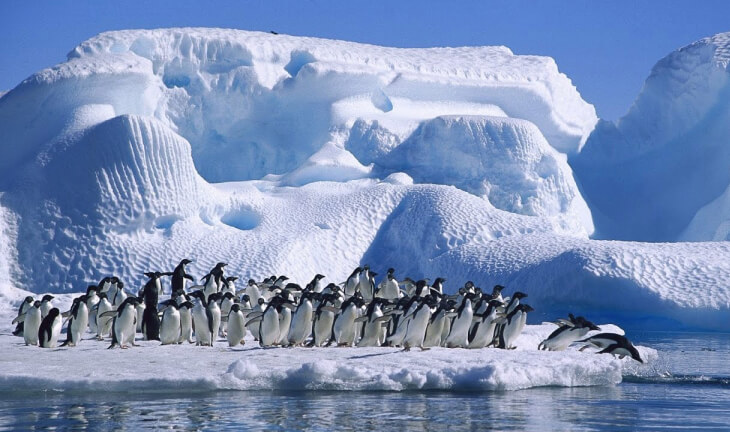
The Earth’s cryosphere isn’t just a fancy phrase reserved for geeky scientists. It’s a phenomenon people encounter in their lives more often than they realize.
Science of Everything will explain what makes up the cryosphere and why it’s so important for the normal functioning of all living organisms on Earth.
What is the cryosphere?
Some places on Earth are so cold that water turns into solid ice or snow. Scientists call these frozen regions of our planet the «cryosphere.» The word «cryosphere» comes from the Greek κρύος, meaning cold, and σφαῖρα, meaning sphere.
The cold regions of our planet influence the entire global climate. Furthermore, the cryosphere plays a central role in the daily lives of the people, plants, and animals that have made it their home.
When scientists talk about the cryosphere, they mean places where water exists in solid form, where low temperatures act on the water and turn it into ice.
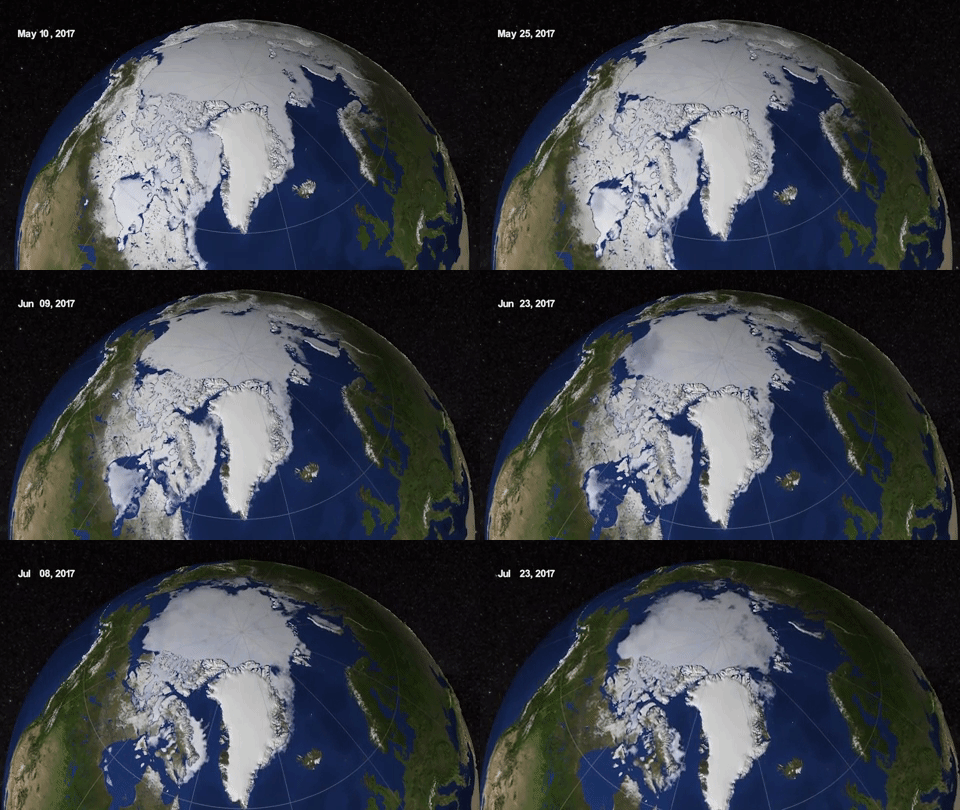
Melting Ice / NASA Scientific Visualization Studio
When people think of the cryosphere, they often think of it at the highest and lowest points of our planet, and in the polar regions. But snow and ice are also found in many other places on Earth.
The Arctic – melts in winter and builds ice in summer
The North Pole is covered by a cold ocean called the Arctic Ocean. Permafrost is also part of it, and the ice in this ocean melts in winter and forms in summer.
Glaciers, snow, and ice also cover the landmass adjacent to the North Pole, called Greenland.
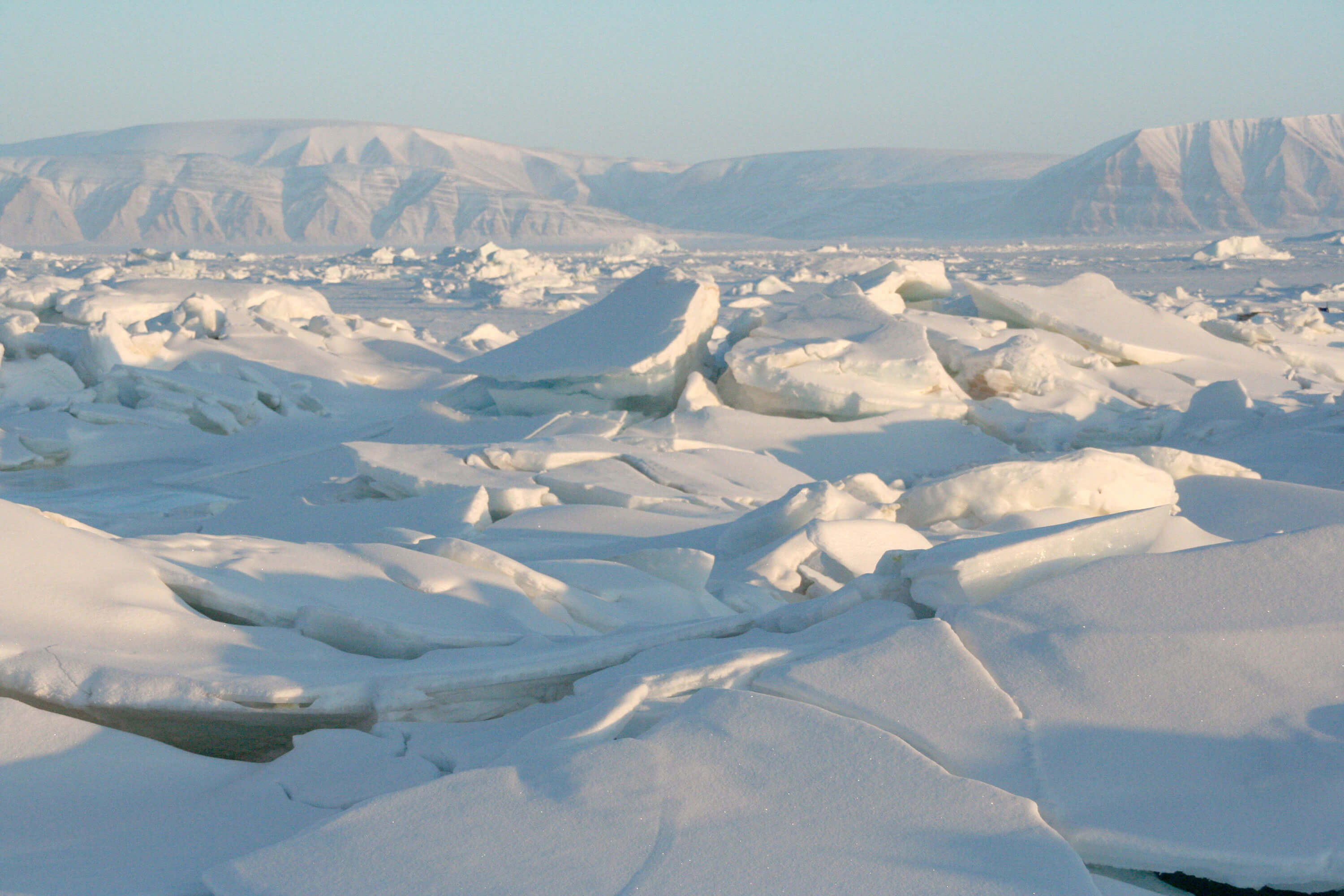 Sea ice is an important aspect of both the Arctic region and Antarctica /
Andy Mahoney, NSIDC.
Antarctica – a land of drifting icebergs
Antarctica, at the Earth’s South Pole, is an icy continent. A vast ice sheet covers the land mass of Antarctica, and in some places, wide sheets of floating ice extend into the ocean. Outermost chunks of these ice break off or calve, forming drifting icebergs. These icebergs float in the oceans and melt when they reach warmer waters.
The cryosphere also exists in places far from the cold poles, at high altitudes. For example, snow on Mount Kilimanjaro in Africa. Frozen soil can be found high in the mountains of the United States, as well as in northern parts of Canada and China.
The cryosphere expands its reach during the cold winter months. Seasonal regions of the cryosphere include areas where snow falls and where soil, rivers, and lakes freeze.
 Frozen lands of the cryosphere also exist outside the polar regions, in places like Mount Rainier National Park in Washington /2008 Jupiter Images
Snow and ice are key ingredients in every aspect of the cryosphere, including mountain snow caps, sea ice, glaciers, ice shelves, icebergs, and permafrost.
Sea ice is the habitat of Arctic fauna
Sea ice forms when ocean water cools to below freezing. Most sea ice is found in the Arctic and Antarctic belts.
Some facts about sea ice:
- It does not raise sea levels when it melts because it is formed from seawater;
- It is closely linked to our planet’s climate, so scientists are concerned about the recent decline in its formation;
- It plays a central role in the lives and customs of Arctic indigenous peoples;
- It is a habitat for polar bears, seals, and other animals;
- It is one way scientists study the effects of climate change.
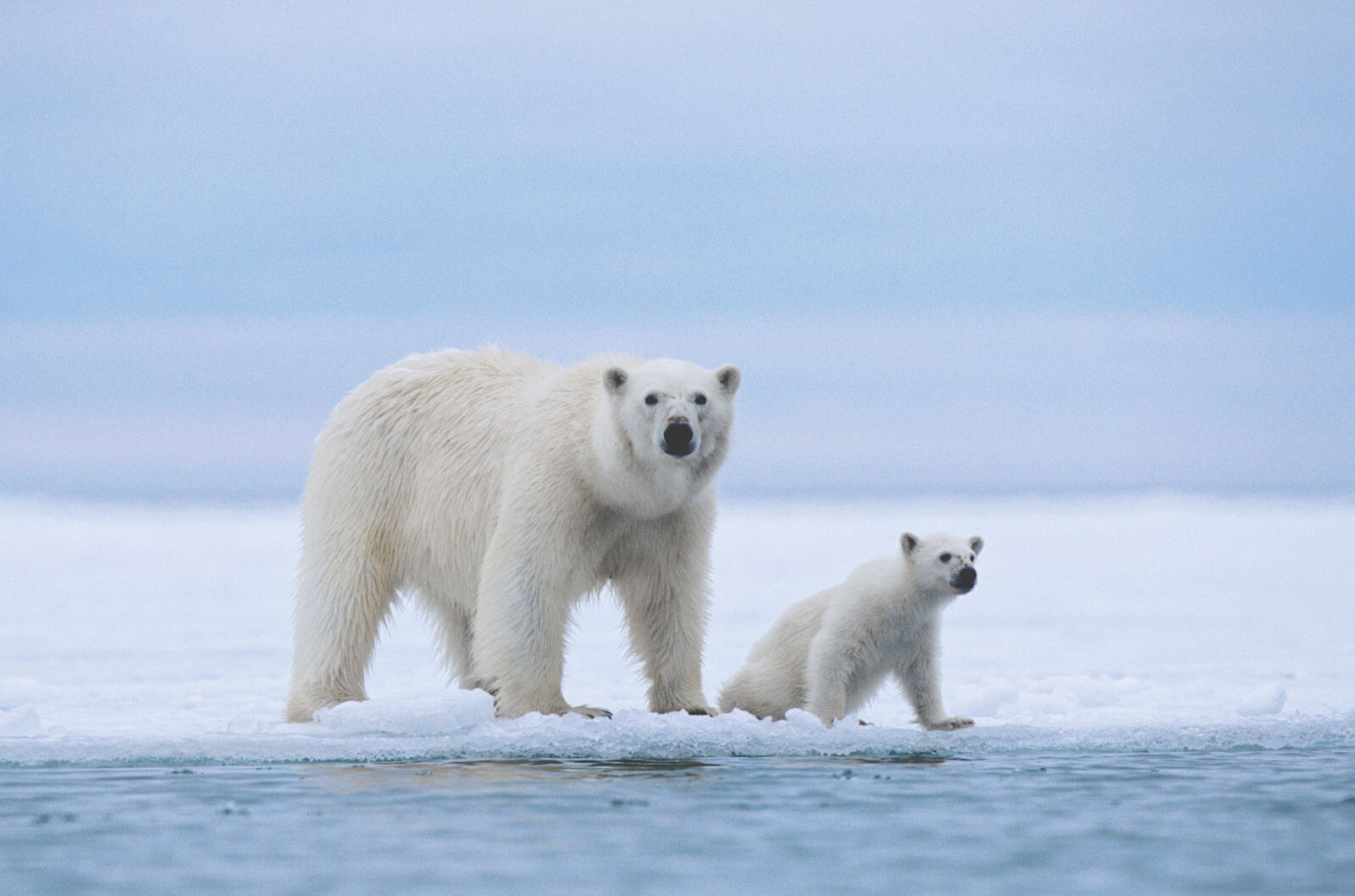 The polar bear is a typical representative of the Arctic fauna / CorelDRAW Photo
Glaciers – Landscape Designers
Glaciers are thick masses of ice on land. This ice has accumulated over many seasons of snowfall.
5 facts about glaciers:
- they cover 10% of the world’s land;
- they are much smaller today due to climate change;
- they can appear pink due to algae living in the upper layers of snow and ice;
- they store 75% of the world’s fresh water and provide it to many people around the world;
- they change the landscape of the earth with their weight as they pass through.
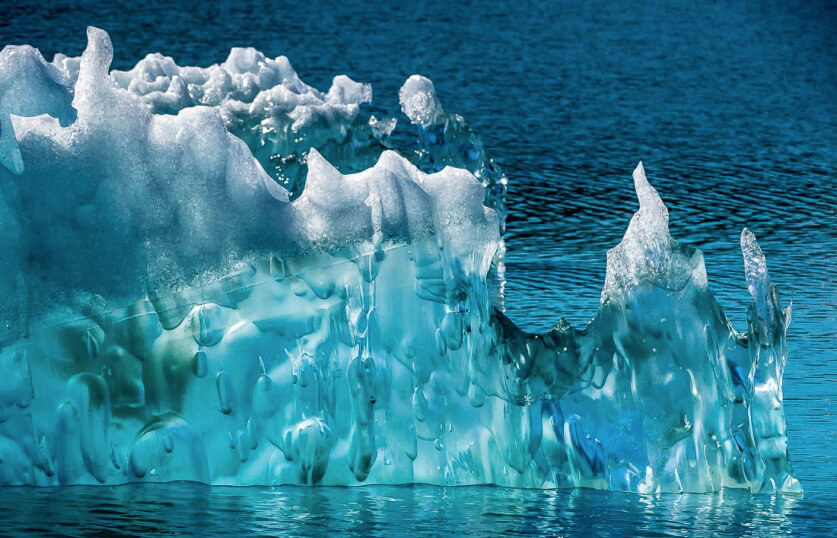 Glacier Uppsala is one of the fastest-melting glaciers in Patagonia / Sergey Dolya Livejournal
Ice shelves and icebergs – «ice cubes in a glass»
Ice shelves are platforms of ice that form ice sheets and glaciers in the oceans. Ice shelves are found primarily in Antarctica and Greenland, as well as in the Arctic near Canada and Alaska. Icebergs are chunks of ice that have broken off from ice shelves and drift through the oceans.
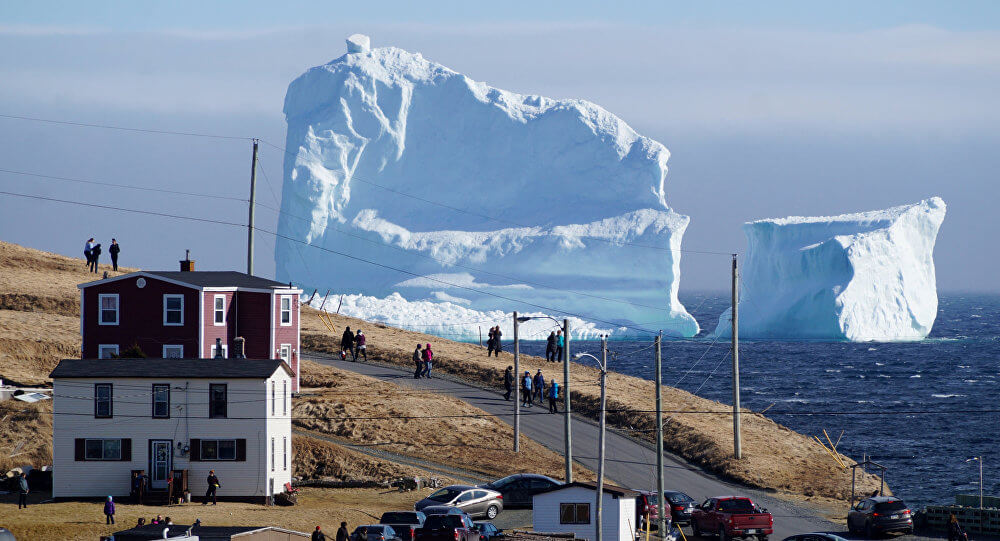 An iceberg drifting near Newfoundland, Canada / Reuters
A little more about ice shelves and icebergs:
- They only raise sea levels when they break off/calve from the ice sheet and fall into the water, and not when they melt, as many people think;
- They break into smaller pieces and melt as they rise temperatures;
- In 2002, the massive Lehrsen Ice Shelf in Antarctica broke up in just a few months, sending hundreds of icebergs adrift across the ocean;
- provide shelter for krill (ocean shrimp), small fish eaten by penguins, seals, whales, and seabirds;
- are an important area of research for a wide range of scientists studying biology, glaciers, climate, and other fields;
- are keys to unraveling the future of ice sheets in a warming world.
What’s Hidden Behind Permafrost?
Permafrost is land in which some or all of the water has frozen. The main criterion for permafrost is that the ground must be frozen year-round.
Some facts about permafrost:
- It exists primarily in the Arctic and Antarctic, but permafrost can also be found at high altitudes around the world;
- Due to rising average annual temperatures, permafrost is beginning to thaw;
- It often has a «living layer» near the surface where plants can thrive, as the soil thaws several times throughout the year;
- It creates problems for people constructing buildings, roads, or dams, as the ground can shift when it thaws;
- It stores greenhouse gases such as carbon and methane – scientists are currently studying how their active release could affect the fate of the entire planet’s climate.
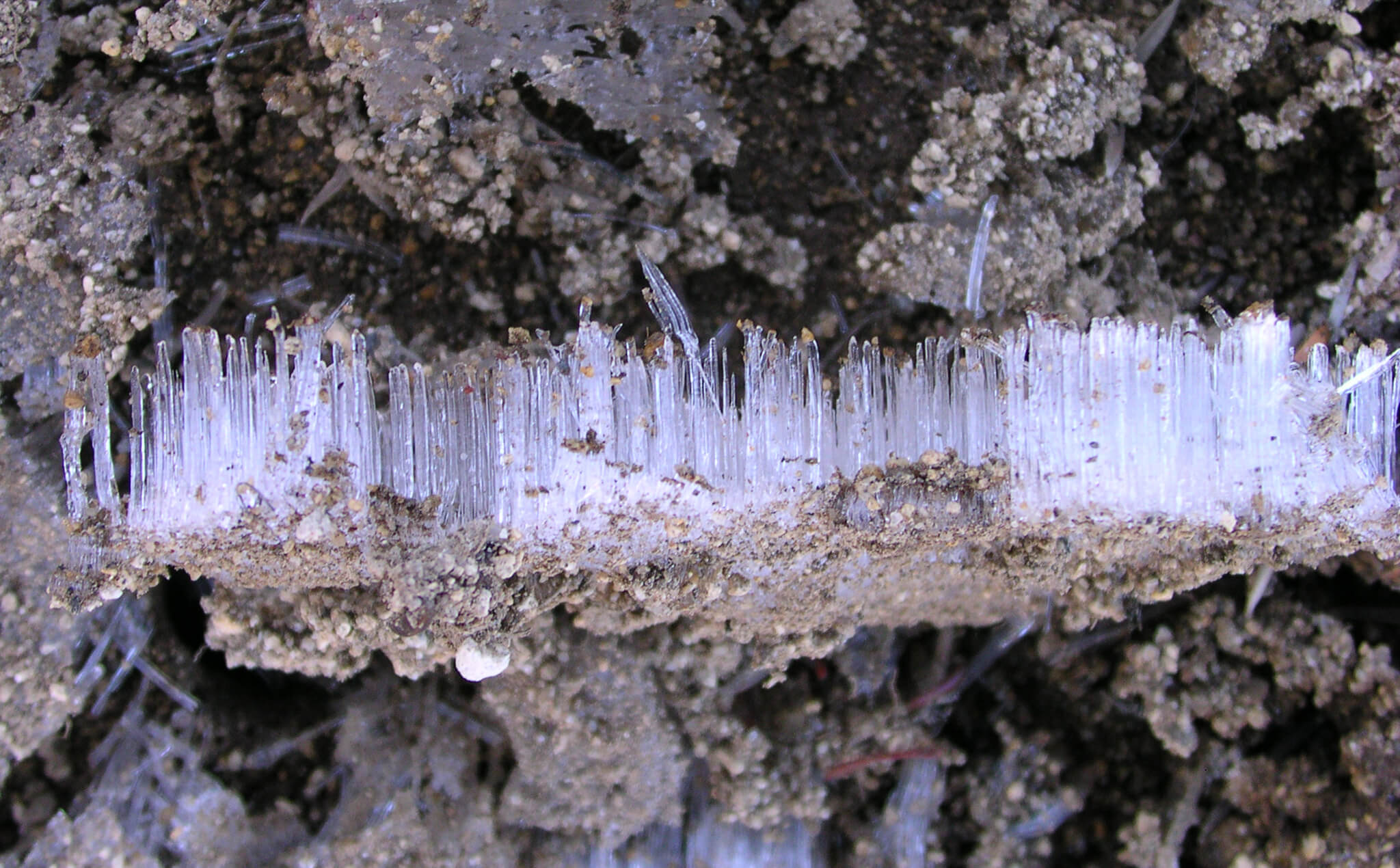 Cylindrical ice crystals in soil / National Snow and Ice Data Center
The cryosphere is part of the key to the stability of life on Earth. Its preservation depends largely on human activity, and global warming is proof of this.
Planet Earth is, above all, unique in its balance, and people must turn their attention to the destruction of this beautiful world, a destruction that will cost future generations dearly, but which modern humans still have the power to stop.

 Subscribe to the newsletter
Сообщить об опечатке
Текст, который будет отправлен нашим редакторам: