

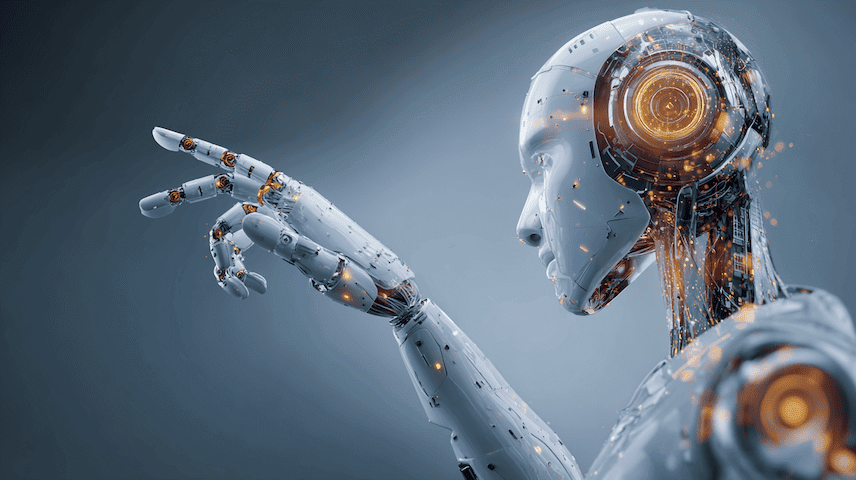
Introduction: Why 2026 Will Be a Defining Year for Technology
As the pace of innovation accelerates, 2026 is emerging as a pivotal year for technology.
Breakthroughs once considered experimental are moving into real-world deployment, reshaping industries, economies, and everyday life.
The technology trends shaping 2026 are defined not by hype, but by scalable and impactful solutions.
1. AI Moves From Tools to Autonomous Systems
Artificial intelligence in 2026 will increasingly operate as autonomous systems rather than simple productivity tools.
AI agents capable of planning, reasoning, and executing multi-step tasks across digital environments are becoming mainstream.
- Autonomous business operations
- AI-driven scientific research
- Self-optimizing software systems
2. Generative AI Becomes Core Digital Infrastructure
Generative AI is transitioning from experimental use to foundational digital infrastructure.
In 2026, it will be embedded directly into operating systems, enterprise platforms, and creative pipelines.
- AI-generated code inside development environments
- Multimodal content creation (text, image, video, audio)
- Real-time personalization at scale
3. Spatial Computing and Digital-Physical Integration
Spatial computing is enabling seamless interaction between digital content and the physical world.
Unlike earlier VR cycles, 2026 focuses on practical, productivity-driven applications.
Key Use Cases
- Industrial training and simulation
- Healthcare visualization
- Architecture and urban planning
4. Quantum Computing Reaches Practical Thresholds
Quantum computing is expected to reach meaningful milestones in 2026.
Hybrid quantum-classical systems will begin solving highly specific problems faster than traditional supercomputers.
- Drug discovery and materials science
- Advanced cryptography
- Climate and energy modeling
5. Climate Tech and Energy Intelligence Scale Up
Climate technology is shifting from experimentation to large-scale deployment.
Sustainability is becoming a core engineering requirement across industries.
Major Developments
- AI-powered smart energy grids
- Advanced battery storage systems
- Carbon monitoring and optimization technologies
6. Biotech and AI Convergence Accelerates
The fusion of biotechnology and artificial intelligence is transforming healthcare and life sciences.
AI-driven diagnostics and personalized medicine are becoming more precise and accessible.
7. Cybersecurity Enters the Zero-Trust Era
With increasing automation and AI-powered threats, cybersecurity strategies are evolving rapidly.
Zero-trust architectures are becoming standard across enterprises in 2026.
- AI-driven threat detection
- Identity-first security models
- Post-quantum encryption readiness
8. Decentralized Technologies Mature Beyond Speculation
Decentralized systems are moving away from speculative use cases toward real-world utility.
Regulatory clarity is accelerating adoption across multiple sectors.
9. Human-Centered and Ethical Technology Design
As technology grows more powerful, ethical design and human-centered approaches are gaining priority.
Trust, transparency, and privacy are becoming competitive advantages.
10. Intelligent Automation Across Industries
Automation in 2026 focuses on augmenting human capabilities rather than replacing them.
AI, robotics, and process intelligence are merging to create resilient systems.
Conclusion: Technology in 2026 Is About Impact
The most important technology trends shaping 2026 emphasize maturity, responsibility, and integration.
Innovation is increasingly measured by real-world impact, long-term value, and societal benefit rather than novelty alone.
About the Article
This article is based on current research, industry analysis, and emerging adoption patterns in artificial intelligence,
biotechnology, climate technology, and digital infrastructure.

 Subscribe to the newsletter




Сообщить об опечатке
Текст, который будет отправлен нашим редакторам: