

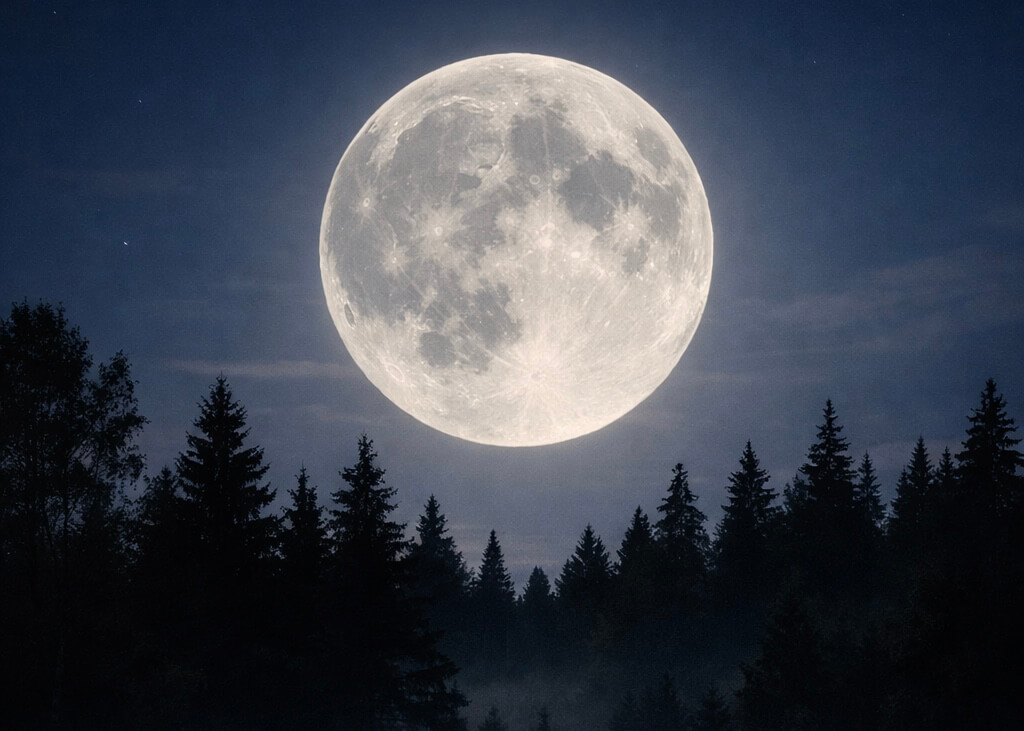
For centuries, the full Moon has been blamed for strange human behaviour — restless sleep, vivid dreams and even mood swings. Hospitals, police officers and shift workers often swear that nights feel different when the Moon is bright and round.
But is there really something mystical happening in our brains? Or is science offering a more down-to-earth explanation?
Does the Full Moon Actually Affect Sleep?
Surprisingly, research suggests there might be a small effect. Several sleep studies have found that around the full Moon, some people take longer to fall asleep and sleep slightly less overall. Deep sleep may also decrease a little.
But before blaming cosmic forces, scientists point to much simpler reasons.
“The Moon doesn’t change human behaviour through magic — it changes our environment,” sleep researchers often note.
And our brains are extremely sensitive to environmental cues.
Light: The Most Powerful Sleep Signal
Human sleep evolved long before electric lighting. For most of history, the Moon was the brightest natural light source at night.
A full Moon can dramatically increase nighttime brightness, especially in rural areas or places with little artificial lighting. Even today, moonlight entering a bedroom can subtly affect sleep.
Light suppresses melatonin, the hormone that helps regulate sleep timing. When melatonin production drops, falling asleep becomes harder and sleep becomes lighter.
In modern cities, streetlights often overpower moonlight, but our brains still respond to changes in nighttime brightness — even small ones.
Evolution May Still Influence Us
Some scientists think human biology may still carry traces of ancestral behaviour. In pre-industrial times, brighter nights could have encouraged social activity, hunting or travel.
In other words, our ancestors may have naturally stayed awake longer during bright nights, and parts of that biological pattern may still linger.
Expectation Plays a Role Too
There is also a psychological factor. People often expect something unusual to happen during a full Moon. When sleep feels slightly disturbed, the Moon becomes an easy explanation.
This is a classic example of confirmation bias: we remember restless full-Moon nights but forget the many peaceful ones.
Modern Sleep Problems Have Other Causes
In reality, most sleep disturbances have far more powerful causes than lunar cycles:
• screen exposure before bedtime
• irregular sleep schedules
• stress and anxiety
• caffeine or alcohol consumption
• late-night scrolling or work
Compared to these factors, the Moon’s influence — if present at all — is small.
No Werewolves, Just Biology
The idea that the full Moon drives people mad or causes chaos is deeply rooted in folklore. But modern science shows that any influence on sleep is subtle and environmental, not mystical.
The Moon doesn’t control human behaviour. It simply changes the light around us — and our brains, still tuned to natural rhythms, respond accordingly.
So if you sleep badly during the next full Moon, there’s no need to blame cosmic forces. You might just need thicker curtains — or a slightly earlier bedtime.

 Subscribe to the newsletter



Сообщить об опечатке
Текст, который будет отправлен нашим редакторам: