

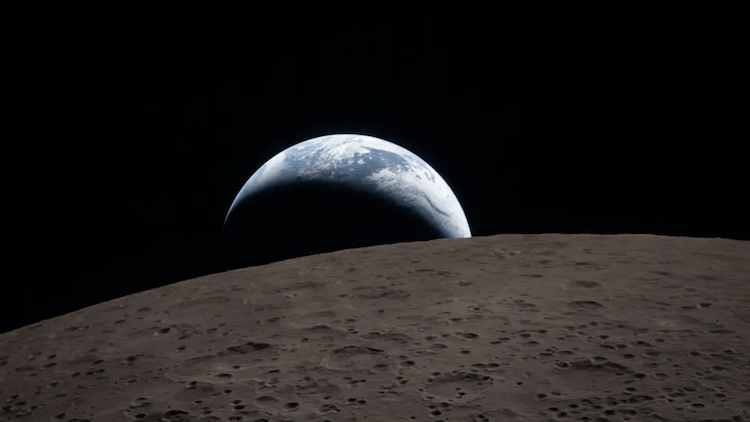
The publication of newly captured images of the Moon’s far side by astronauts aboard Artemis II represents a pivotal moment for both space science and human exploration. Although this hemisphere has been imaged before, these are the first high-resolution photographs taken directly by a human crew using modern digital systems—bringing a new level of clarity, control, and scientific value.
Beyond historic imagery
The far side of the Moon is not new to science. It was first revealed to humanity by the Soviet Luna 3 mission and later observed by astronauts during Apollo 8. However, those earlier observations were constrained by analogue photography, limited transmission bandwidth, and minimal onboard processing.
In contrast, Artemis II benefits from:
- high-resolution digital sensors
- onboard image stabilisation and enhancement
- near real-time transmission to Earth
This shift transforms the far side from a largely archival subject into a dynamic dataset suitable for modern analysis.
A surface shaped differently
The Moon’s far side remains one of the most geologically distinct regions in the inner Solar System. Unlike the near side—characterised by vast dark plains—the far side is dominated by rugged terrain.
Key characteristics include:
- Extensive crater coverage, indicating an older and less resurfaced crust
- Scarcity of maria, suggesting limited volcanic flooding in its history
- Structural asymmetry, reinforcing models such as the Giant Impact Hypothesis
The new images provide improved detail in transitional zones, where these features interact—areas that are particularly valuable for refining lunar evolution models.
Scientific value of the new data
The significance of these images lies not just in their quality, but in how they can be used.
1. High-precision mapping
Enhanced resolution allows scientists to reassess crater sizes, ejecta patterns, and layering—key inputs for dating the lunar surface.
2. Improved mission planning
While current landing strategies under the Artemis program focus on the near side, long-term exploration may extend further. Understanding terrain hazards and composition on the far side is essential for this expansion.
3. Foundation for radio astronomy
The far side’s natural shielding from Earth-based radio signals makes it uniquely suited for sensitive astronomical instruments. These images help identify stable and suitable locations for future installations.
Operational breakthroughs
Capturing these images required more than advanced cameras. It demonstrates maturity in several mission-critical systems:
- Crew-guided observation protocols, allowing astronauts to select and frame targets
- Cislunar communication infrastructure, ensuring data relay even when direct Earth line-of-sight is lost
- Precision trajectory control, enabling optimal observational windows
These capabilities will directly support future missions, including Artemis III and beyond.
Strategic importance for the UK and Europe
For the UK scientific community, the implications extend beyond observation. Participation through organisations such as European Space Agency creates pathways for:
- contributing scientific instruments
- analysing high-resolution datasets
- developing communication and navigation technologies
This aligns with broader ambitions to strengthen Europe’s role in deep space exploration.
Conclusion
The latest images of the Moon’s far side are not simply a visual milestone—they represent a transition to a new era of human-assisted space observation. By combining astronaut perspective with modern imaging technology, Artemis II bridges the gap between historic exploration and future lunar infrastructure.
As the Artemis program advances, these observations will serve as both a scientific resource and a strategic foundation for humanity’s next steps beyond Earth orbit.

 Subscribe to the newsletter





Сообщить об опечатке
Текст, который будет отправлен нашим редакторам: