

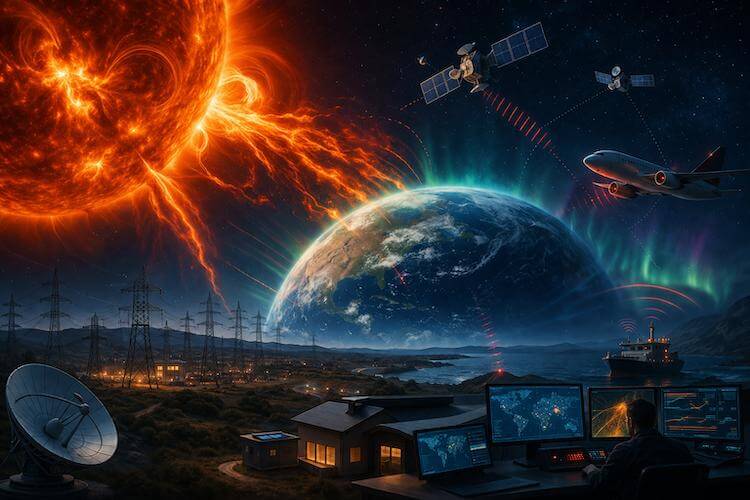
Did you know that our Sun is not always as calm and peaceful as it may seem? In fact, it can often get quite feisty and cause what we call solar storms. These solar storms can have a big impact on technology here on Earth.
The Sun is actually a massive ball of hot gases, constantly churning and swirling with activity. Sometimes, this activity can result in the release of powerful bursts of energy and particles into space, known as solar storms.
- Solar Flares: One type of solar storm is called a solar flare. These intense bursts of radiation can happen when magnetic energy builds up in the Sun’s atmosphere and is suddenly released.
- Coronal Mass Ejections (CMEs): Another type of solar storm is a coronal mass ejection. This occurs when the Sun releases a huge cloud of particles and magnetic fields into space.
These solar storms can send a wave of charged particles hurtling towards Earth, which can interact with our planet’s magnetic field and atmosphere. While we may not feel the effects directly, they can definitely impact the technology we rely on every day.
So, why should we care about solar storms and their impact on Earth’s technology? Well, understanding how these solar events can affect our devices and systems is crucial for protecting them and minimizing any potential disruptions.
Throughout history, major solar storms have caused widespread issues, from disrupting satellite communications to knocking out power grids. By learning more about these phenomena and how they interact with our technology, we can better prepare for any future disruptions that may occur.
What causes solar storms and how they form
Have you ever wondered what causes those intense solar storms that can disrupt our technology here on Earth? Well, let’s dive into it! Solar storms are triggered by the Sun’s complex magnetic fields. The Sun is made up of super-hot gases that are constantly moving and churning. These movements can create knots and tangles in the magnetic fields, leading to solar storms.
One of the main factors that contribute to solar storm formation is sunspots. Sunspots are dark areas on the Sun’s surface caused by strong magnetic fields. When these magnetic fields become twisted or tangled, they can release massive amounts of energy in the form of solar flares or coronal mass ejections (CMEs).
- Solar flares: These are intense bursts of radiation that can last from minutes to hours. They are caused by a rapid release of magnetic energy in the Sun’s atmosphere. Solar flares can send high-energy particles hurtling towards Earth at incredible speeds.
- Coronal mass ejections (CMEs): These are massive expulsions of plasma and magnetic field from the Sun’s corona. CMEs can be several times the size of Earth and travel outwards in all directions. When a CME reaches Earth, it can cause geomagnetic storms and disrupt our technology.
So, in a nutshell, solar storms are the result of the Sun’s magnetic fields getting twisted and tangled, leading to the release of huge amounts of energy in the form of solar flares and CMEs. Understanding the causes of solar storms is crucial for predicting and mitigating their potential impacts on our technology.
Types of Solar Storms: Solar Flares and Coronal Mass Ejections (CMEs)
Solar storms are intense bursts of energy from the Sun that can have a significant impact on Earth’s technology. There are two main types of solar storms: solar flares and coronal mass ejections (CMEs).
- Solar Flares: Solar flares are sudden releases of energy on the Sun’s surface that can generate intense radiation across the electromagnetic spectrum. These bursts of energy can cause radio blackouts, disrupt communication systems, and even pose a hazard to astronauts in space.
- Coronal Mass Ejections (CMEs): CMEs are massive explosions of plasma and magnetic field from the Sun’s corona into space. These events can send billions of tons of solar material hurtling towards Earth at high speeds. When these charged particles interact with Earth’s magnetic field, they can trigger geomagnetic storms that disrupt technology on our planet.
Both solar flares and CMEs have the potential to impact Earth’s technology in various ways, making them important phenomena to study and understand. By monitoring these solar storms, scientists can better predict their effects and develop strategies to protect our technological infrastructure.
The impact of solar storms on Earth’s technology
Solar storms can have a significant impact on the technology we rely on every day. These powerful bursts of energy from the Sun can disrupt communication networks, knock out satellites, and even cause power outages. But how exactly do solar storms affect our technology?
When a solar storm, such as a solar flare or coronal mass ejection (CME), hits Earth’s magnetic field, it can cause geomagnetic disturbances. These disturbances can induce electric currents in power lines, leading to voltage fluctuations and potentially damaging transformers in power grids.
- Satellites and GPS systems are particularly vulnerable to solar storm activity. The charged particles from a solar storm can interfere with satellite electronics, disrupting signals and causing communication errors. This can lead to outages in GPS services, affecting everything from transportation systems to agriculture.
- Power grids are also at risk during solar storms. The induced currents can overload transformers and other critical infrastructure, leading to widespread blackouts. In 1989, a massive solar storm caused a blackout in Quebec, leaving millions without power for hours.
- Communication networks, such as radio and internet services, can also be disrupted by solar storm activity. The charged particles can interfere with radio signals, causing static or complete signal loss. This can impact emergency services, air traffic control, and other vital communication systems.
The potential risks posed by solar storm activity to our technology are not just theoretical. Historical examples, such as the Carrington Event of 1859 and the Solar Storm of 2012, have shown how devastating solar storms can be for modern technology.
Scientists closely monitor and predict solar storm activity using satellites and ground-based observatories. By understanding the behavior of the Sun and its impact on Earth, researchers can provide early warnings for governments and industries to prepare for potential disruptions.
However, despite these efforts, mitigating the effects of solar storms on our technology remains a challenge. Developing protective measures, such as shielding satellites and upgrading power grid infrastructure, is crucial to minimizing the impact of future solar storms.
As we continue to study and learn more about solar storm effects, it’s important to stay informed and prepared for potential disruptions to our technology. By understanding the risks and developing strategies to protect our infrastructure, we can mitigate the impact of solar storms on Earth’s technology.
Effects of Solar Storms on Satellites and GPS Systems
Satellites play a crucial role in our everyday lives, from weather forecasting to communication and navigation. However, when a solar storm hits, these satellites can be in danger.
Solar storms release bursts of energy and charged particles into space. When these particles interact with Earth’s magnetic field, they can create disturbances in the upper atmosphere. This can lead to increased drag on satellites, causing them to lose altitude.
GPS systems, which rely on signals from satellites to determine location and time, can also be affected by solar storms. The charged particles can interfere with these signals, leading to inaccuracies in navigation.
- Satellite Communication: Solar storms can disrupt communication between satellites and ground stations, affecting the transmission of data and images.
- GPS Navigation: During a solar storm, GPS receivers may experience signal degradation or even complete signal loss, impacting everything from navigation to timing synchronization.
- Satellite Health: Satellites are susceptible to radiation damage during solar storms, which can affect their functionality and lifespan.
It is essential for satellite operators and GPS users to be aware of potential disruptions caused by solar storms. By monitoring solar activity and taking proactive measures, such as adjusting satellite orbits or implementing backup systems, the impact of these storms can be minimized.
Scientists continue to study the effects of solar storms on satellites and GPS systems in order to improve prediction models and develop better mitigation strategies. Understanding how solar storms interact with technology is key to safeguarding our vital satellite infrastructure and ensuring reliable GPS services for years to come.
How solar storms disrupt power grids and communication networks
Solar storms, such as solar flares and coronal mass ejections (CMEs), can wreak havoc on Earth’s technology by disrupting power grids and communication networks. When these intense bursts of solar energy collide with Earth’s magnetosphere, they create geomagnetic storms that have the potential to cause widespread disruption.
- Power Grids: Solar storms can induce electric currents in power lines, transformers, and other electrical equipment, causing them to overload and malfunction. This can lead to power outages in affected areas, leaving communities without electricity for hours or even days. In extreme cases, the damage caused by a solar storm could take months or even years to repair.
- Communication Networks: Solar storms can also interfere with radio signals, GPS systems, and satellite communications. This can affect aviation and maritime navigation, emergency response systems, and financial transactions that rely on precise timing and location data. Communication disruptions during solar storms can result in delays, inaccuracies, and even loss of critical information.
Overall, the disruption caused by solar storms to power grids and communication networks can have far-reaching consequences, impacting our daily lives, economies, and infrastructure. It is essential for scientists, engineers, and policymakers to understand and prepare for these potential risks in order to mitigate their impact on society.
The potential risks posed by solar storm activity to our technology
Solar storms can pose significant risks to our technology infrastructure here on Earth. These events have the potential to disrupt a wide range of systems that we rely on daily, including communication networks, power grids, and satellite operations.
One of the main concerns when it comes to solar storms is their ability to induce powerful electrical currents in long conductors, such as power lines. This can lead to voltage fluctuations and even damage transformers in power grids, resulting in widespread blackouts and potential damage to electronic devices connected to the grid.
Communication networks are also vulnerable to the effects of solar storms. High-energy particles from these events can interfere with satellite transmissions and disrupt GPS signals, affecting a wide range of industries that rely on precise location data, like transportation and telecommunications.
- Satellites: Solar storms can damage satellite electronics and systems, affecting their operation and potentially causing them to fail. This can lead to disruptions in weather forecasting, communication services, and scientific research.
- GPS Systems: The accuracy of GPS systems can be significantly impacted during periods of heightened solar activity. This can have far-reaching implications for navigation systems, aviation safety, and military operations.
In addition to immediate disruptions, the long-term effects of solar storms on technology can also be costly. Repairing and replacing damaged equipment can be expensive, not to mention the economic losses incurred from downtime and reduced productivity due to infrastructure failures.
As our reliance on technology continues to grow, it becomes increasingly crucial to understand and mitigate the risks posed by solar storm activity. By studying the patterns and potential impacts of these events, scientists and policymakers can develop strategies to protect critical infrastructure and minimize the detrimental effects on society as a whole.
Historical Examples of Major Solar Storms and their Impact on Earth
Solar storms have been known to cause disruptions to technology on Earth throughout history. One of the most famous incidents occurred in 1859, known as the Carrington Event. During this solar storm, a massive coronal mass ejection (CME) hit Earth’s magnetosphere, causing widespread disruptions to telegraph systems around the world. Telegraph lines sparked, operators received electric shocks, and some telegraph offices even caught fire. This event highlighted the vulnerability of our technology to the power of solar activity.
Another significant solar storm occurred in 1989, when a geomagnetic storm caused by a CME led to a major blackout in Quebec, Canada. The disruption in power lasted for nine hours, affecting millions of people in the region. This event served as a wake-up call to the potential dangers of solar storms on our modern infrastructure.
More recently, in 2012, a powerful solar storm narrowly missed Earth, as it was located on the opposite side of the Sun. If it had struck our planet, scientists estimate that it could have caused extensive damage to communication satellites, GPS systems, and power grids. This event highlighted the importance of monitoring and predicting solar activity to mitigate potential risks to our technology.
- The Carrington Event in 1859 caused disruptions to telegraph systems worldwide.
- The 1989 Quebec blackout was caused by a geomagnetic storm from a CME.
- In 2012, a powerful solar storm narrowly missed Earth, highlighting the potential risks.
These historical examples demonstrate the real-world impact that solar storms can have on our technology. As our reliance on advanced systems continues to grow, it is crucial to understand and prepare for the effects of solar storm activity on Earth’s infrastructure.
How scientists monitor and predict solar storm activity
Monitoring and predicting solar storm activity is crucial in order to prepare for potential impacts on Earth’s technology. Scientists use a variety of tools and techniques to study the Sun and track its activity.
One key tool is the Solar and Heliospheric Observatory (SOHO), a satellite that monitors solar activity 24/7. SOHO can detect solar flares and coronal mass ejections (CMEs) as they occur, providing valuable data for scientists to analyze.
- Solar Flares: Scientists monitor the Sun’s surface for any sudden bursts of energy known as solar flares. These intense bursts of radiation can disrupt communication systems and pose a risk to satellites in orbit.
- Coronal Mass Ejections (CMEs): CMEs are massive explosions of solar material that can travel towards Earth at high speeds. By tracking these events, scientists can predict when a CME might impact our planet, giving us time to prepare for potential disruptions.
In addition to monitoring the Sun itself, scientists also use space weather forecast models to predict how solar storms will affect Earth. These models take into account factors such as the strength and direction of solar storms, as well as the potential impact on Earth’s magnetic field.
By combining data from satellites like SOHO with advanced computer models, scientists can provide early warnings about impending solar storm activity. This information is vital for agencies like NASA and NOAA, who work to protect our technology and infrastructure from the impacts of these powerful cosmic events.
Overall, the ability to monitor and predict solar storm activity has greatly improved our understanding of how these events can affect Earth’s technology. By staying vigilant and prepared, we can minimize the risks posed by solar storms and safeguard our vital communication networks, power grids, and satellite systems.
Mitigation strategies for protecting technology from solar storms
As scientists continue to study solar storm activity and the potential risks they pose to Earth’s technology, it is important to develop mitigation strategies to protect our devices and systems. While we cannot prevent solar storms from occurring, there are steps that can be taken to minimize their impact.
- Hardening technology: One approach is to harden technology to withstand the effects of solar storms. This involves designing devices and infrastructure with components that are less susceptible to damage from charged particles and electromagnetic radiation. By strengthening our technology, we can reduce the likelihood of malfunctions or system failures during a solar storm.
- Back-up systems: Another strategy is to implement back-up systems for critical technologies. By having redundant systems in place, such as duplicate power grids or alternative communication networks, we can ensure that essential services remain operational, even if primary systems are affected by a solar storm.
- Emergency response plans: It is also important to create and regularly review emergency response plans for dealing with the effects of a solar storm. By having established procedures in place, organizations can quickly respond to any disruptions caused by solar activity and minimize the impact on their operations.
- Collaboration and information sharing: Collaboration between scientists, government agencies, and technology providers is crucial for developing effective mitigation strategies. By sharing information about solar storm forecasts and potential impacts, we can better prepare for and respond to solar storms, ultimately reducing their effects on our technology.
By implementing these mitigation strategies, we can better protect our technology from the damaging effects of solar storms. It is vital that we continue to invest in research and development to improve our understanding of solar activity and develop innovative solutions to safeguard our devices and infrastructure against these powerful natural events.
Future Research and Developments in Understanding Solar Storm Effects
As scientists continue to study the impacts of solar storms on Earth’s technology, they are working on developing new technologies and strategies to better understand and predict these phenomena. By gaining a deeper understanding of solar storm activity, researchers hope to improve our ability to protect our technology from these powerful events.
- Advancements in Monitoring: Scientists are constantly developing new tools and technologies to monitor solar storm activity more accurately. By improving our monitoring capabilities, we can better predict the timing and severity of solar storms, allowing for more effective preparation and response measures.
- Data Analysis: Researchers are conducting in-depth studies on data collected from past solar storms to identify patterns and trends. By analyzing this data, scientists can gain valuable insights into the behavior of solar storms and their potential impacts on Earth’s technology.
- Simulation Models: Computer simulation models are being used to simulate the effects of solar storms on various technology systems, such as satellites, power grids, and communication networks. These simulations help researchers anticipate the vulnerabilities of our technology and develop strategies to mitigate potential risks.
- Technological Innovations: Advances in technology are also playing a key role in understanding solar storm effects. From the development of more resilient satellite designs to the creation of improved communication protocols, researchers are working on innovative solutions to protect our technology from the damaging effects of solar storms.
By combining these research efforts, scientists are advancing our understanding of solar storms and their impacts on Earth’s technology. Through continued collaboration and innovation, we can develop more robust systems to withstand the challenges posed by these natural phenomena.
Conclusion: How Solar Storm Activity Affects Earth’s Technology
Solar storm activity may seem distant and far away, but its effects can have a big impact on our technology here on Earth. From satellites to power grids, these powerful storms from the sun can disrupt our daily lives in ways we might not even realize.
As we’ve learned, solar storms are caused by the Sun’s intense magnetic activity. They can come in two main forms: solar flares, which are bursts of radiation, and coronal mass ejections (CMEs), which are massive eruptions of solar wind and magnetic fields.
- When these storms hit Earth, they can wreak havoc on our technology. Satellites can be knocked out of orbit or damaged, causing disruptions to GPS systems and communications networks. Power grids can experience surges that lead to blackouts and damage to crucial infrastructure.
- These disruptions can have serious consequences for industries, economies, and even safety and security measures. In extreme cases, the risks posed by solar storm activity can be catastrophic.
- Throughout history, major solar storms have occurred with damaging effects. By studying these events, scientists have learned how to monitor and predict solar storm activity, giving us some advance warning and the opportunity to take preventive measures.
- Mitigation strategies include designing technology to be more resistant to solar storm effects and developing emergency response plans. Ongoing research continues to deepen our understanding of how solar storms affect our technology and how we can better protect against them in the future.
In conclusion, the impacts of solar storm activity on Earth’s technology are real and potentially significant. By staying informed, prepared, and proactive, we can work towards minimizing the disruptions caused by these powerful phenomena and ensuring the resilience of our technological systems in the face of solar fury.

 Subscribe to the newsletter






Сообщить об опечатке
Текст, который будет отправлен нашим редакторам: